
Upcycling Rare Earths from Discarded Hard Disk Magnets
In the EU project NEO-CYCLE, Fraunhofer IKTS and partners are developing processes to recover neodymium, boron and iron from end-of-life hard disk drives in Europe.
www.fraunhofer.de
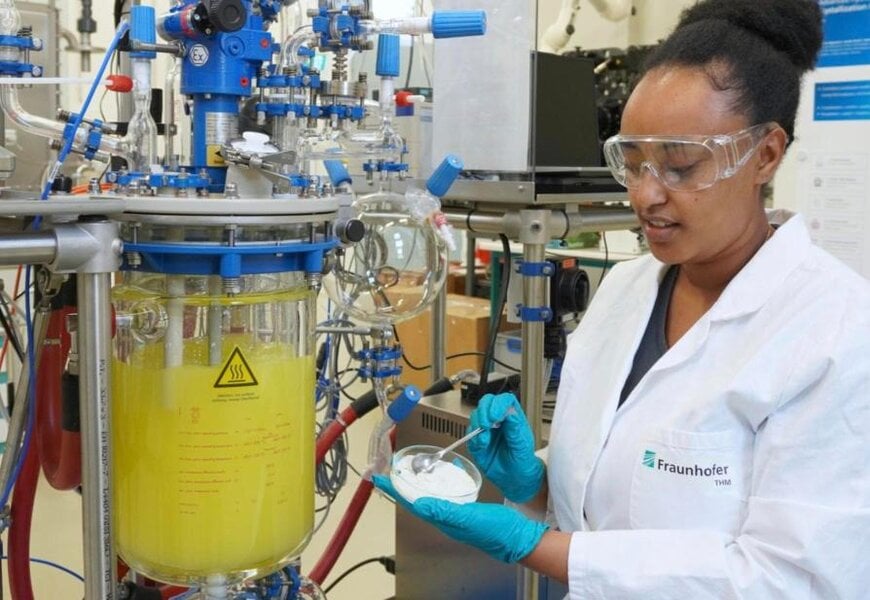
Neodymium magnets are among the strongest permanent magnets in the world. The compound of neodymium, iron and boron is used in electric vehicles, wind turbines and electronic products such as loudspeakers, smartphones and hard disk drives. Global demand for permanent magnets continues to rise, with annual growth rates estimated at up to 8.3 percent. Recycling scarce rare earths such as neodymium is therefore increasingly important, but technically complex.
Closing Material Cycles and Securing Raw Materials
To reuse neodymium in new magnets, very high purity is required, and establishing a process that meets this requirement while remaining economical is challenging. As a result, magnets are hardly recycled in Europe today. They are mostly collected, shipped to China for reprocessing, and around 90 percent of materials such as neodymium are subsequently re-imported.
In the EU project NEO-CYCLE, Dr. Sandra Pavón and project partners are developing a process that allows these valuable raw materials to be extracted in Europe. “We want to recover rare earths from electronic waste and use them for high-quality products such as green fertiliser or for manufacturing pharmaceutical products,” explains the head of the Hydrometallurgical Recycling and Raw Material Chemistry group at Fraunhofer IKTS in Freiberg. “This allows us to create a materials cycle, protect the environment and promote global independence from strategic resources.”
Two Processing Routes Under Evaluation
The upcycling process can be applied to various types of magnets. NEO-CYCLE focuses on hard disk drives (HDD) from discarded computers and laptops, which contain neodymium magnets. “We are testing two processing methods for magnets, solid-state chlorination and electrochemical processes, in order to identify the optimal technology,” says Sandra Pavón.
In solid-state chlorination, carried out at project partner TU Bergakademie Freiberg, ammonium chloride is added to the neodymium-boron-iron mixture from the HDD waste instead of conventional hydrochloric acid. In a thermal process, the mixture is converted directly into metal chlorides and a high-purity ammonia solution. The process is already patented and used for fluorescent lamps; the researchers are now testing whether it is also suitable for upcycling magnets. Results show that metal chlorides can be dissolved from the magnet material much more efficiently, achieving almost complete extraction of the metals with comparatively low chemical consumption.
In the second method, the researchers place powdered magnet waste into an electrochemical cell, with an electrolyte such as dilute sulphuric acid serving as the reaction medium. A boron solution is first extracted from the magnets and later concentrated. This solution can be used in the chemical and pharmaceutical industries.
Separation into High-Purity Metal Salts
The Fraunhofer IKTS researchers then further separate the products obtained from both methods, contributing their expertise in metal separation and process water treatment. Sandra Pavón and her team use a selective hydrometallurgical process to first extract neodymium and iron, after which the metal salts can be obtained in pure form. The separated materials are further refined by the project partners and supplied to the chemical and pharmaceutical industries as well as to sectors such as the hydrogen economy and the fertiliser industry.
Zero-Waste Concept as the Goal
NEO-CYCLE is funded by the European Union under the Horizon Europe programme and runs for a total of four years, with a pilot plant already planned. “The process starts with products that have reached the end of their life cycle, and at the end we can supply four different industrial sectors with valuable recycled raw materials,” says Sandra Pavón.
Additional Context
This section details technical specifications and competitive benchmarking not included in the original product announcement.
Neodymium-iron-boron (NdFeB) magnets typically contain around 30 percent rare earth elements by weight, making end-of-life magnets a concentrated secondary resource compared with primary ores. Conventional hydrometallurgical recycling relies on leaching with strong mineral acids, which generates large volumes of acidic waste water; routes that reduce acid consumption, such as chloride-based thermal treatment or electrochemical dissolution, are therefore a key focus of current research.
The European Critical Raw Materials Act, in force since 2024, sets benchmarks for the EU to cover at least 25 percent of its annual consumption of strategic raw materials through domestic recycling by 2030. Rare earths for permanent magnets are classified as strategic raw materials, which increases the relevance of European recycling capacities that reduce dependence on processing in a small number of non-EU countries.
Edited by Maria Brueva, Induportals editor – adapted by AI.
