
www.technology4environment.com
19
'26
Written on Modified on
Hydrogen Systems Support Decentralized Energy Supply
H2 Core Systems uses digital engineering and automation tools to accelerate the development of modular hydrogen energy systems for autonomous and grid-independent applications.
www.siemens.com
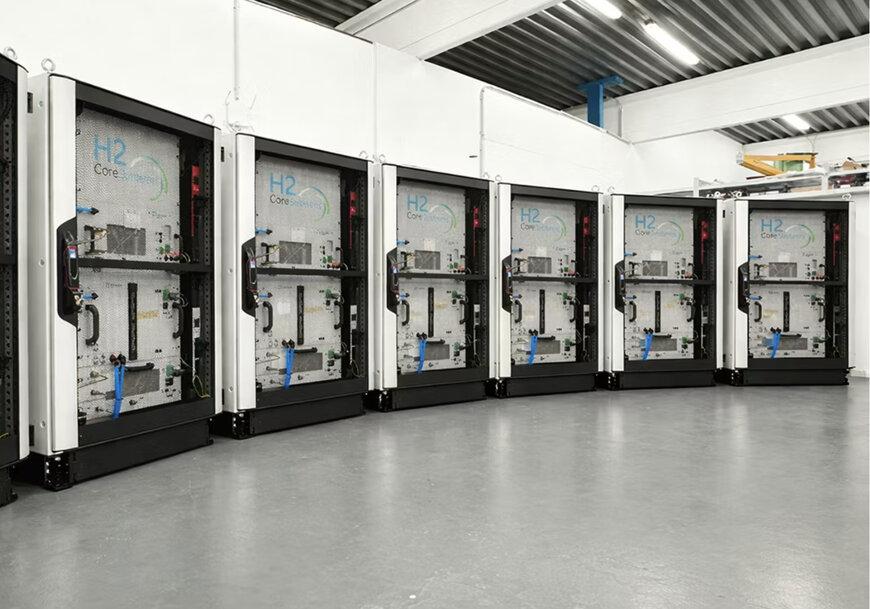
H2 Core Systems, a German manufacturer of modular hydrogen-based energy systems, needed to accelerate the design and deployment of scalable energy infrastructure while adapting systems to varying customer requirements. The company develops integrated hydrogen production, storage and energy conversion systems for decentralized applications, including renewable energy projects in remote or unstable power environments.
Digitalization of Product Development
The company’s systems combine electrolysis, hydrogen storage, compression and fuel cells into configurable energy solutions. As demand for customized hydrogen infrastructure increased, H2 Core Systems faced challenges linked to engineering complexity, distributed collaboration and long production lead times. The company also required a more efficient way to coordinate engineering, production and technical documentation processes.
According to H2 Core Systems, the objective was to improve development speed, reduce manufacturing errors and shorten the time needed to deliver customized installations. The company also sought to support modular scalability for projects ranging from local renewable energy integration to autonomous off-grid power supply.
Integrated Engineering and Automation Platform
To support these objectives, H2 Core Systems adopted Siemens Xcelerator software and automation technologies as the basis of its digital engineering workflow. The company implemented Designcenter X Solid Edge for 3D product design and visualization, combined with Teamcenter Share for cloud-based collaboration and documentation management.
The engineering environment enabled the company to simulate and visualize products digitally before physical manufacturing. This reduced the need for late-stage design modifications and improved communication between engineering, production and sales teams. The collaboration platform also simplified the preparation of technical documentation and customer-facing materials for complex hydrogen installations.
H2 Core Systems additionally integrated S7-1200 programmable logic controllers and the TIA Portal engineering framework to automate system control functions within its hydrogen installations. These automation tools were used to manage operational processes across the company’s modular energy systems.
Ulf Jörgensen, chief executive officer of H2 Core Systems, stated that the company required “fully digitalized, dynamic and efficient collaboration between sales, engineering, production and documentation” to support rapid delivery of modular hydrogen systems.
Faster Customization and Reduced Production Time
The deployment of the digital workflow enabled measurable operational improvements. According to H2 Core Systems, design and customization cycles were accelerated by 20 percent, while production time was reduced by 50 percent. The company also reported overall business growth of 70 percent after implementing the digital engineering and automation environment.
The use of digital product models allowed engineering teams to validate configurations before manufacturing, reducing production errors and supporting faster response to customer-specific requirements. The modular design approach also improved scalability for installations in different operational environments.
Autonomous Energy System for Niger School
One of the projects developed using the engineering platform involved the deployment of a fully autonomous hydrogen energy system for a school in Niger. The installation uses solar energy to power electrolysis, splitting water into hydrogen and oxygen. The hydrogen is stored and later reconverted into electricity when required.
The system was designed to provide an independent, emission-free energy supply without relying on diesel generators, unstable electrical grids or fossil fuel transport chains. The modular architecture allowed the solution to be adapted to local operating conditions and energy demand.
Thorsten Claussen, head of mechanical engineering at H2 Core Systems, explained that the company uses the engineering software to digitize product and production planning while supporting distributed teams and high product variability. According to Claussen, this contributed to shorter development and production preparation times for hydrogen energy systems.
Editado por Maria Brueva, editora de Induportals – adaptado por IA.
www.siemens.com
