
www.technology4environment.com
06
'26
Written on Modified on
ÖBB Accelerates Green Energy Transition With Record Solar Power Expansion
In 2025, ÖBB's 1,100 GWh output powers 275,000 homes, expanding in 2026 with 30+ new solar plants integrating innovative energy, agriculture, and infrastructure solutions.
www.oebb.at
The question of how large-scale transport providers can remain resilient against volatile energy markets while achieving climate neutrality is increasingly central to the global mobility shift. In Austria, the Federal Railways (ÖBB) are answering this challenge by drastically increasing their energy self-sufficiency through a diverse portfolio of renewable sources. By producing its own green electricity, the company distinguishes itself from competitors who rely more heavily on external energy providers and general grid mixes, ensuring both cost stability and a verified 100% renewable energy supply for its operations.
Innovative Infrastructure for Maximum Efficiency
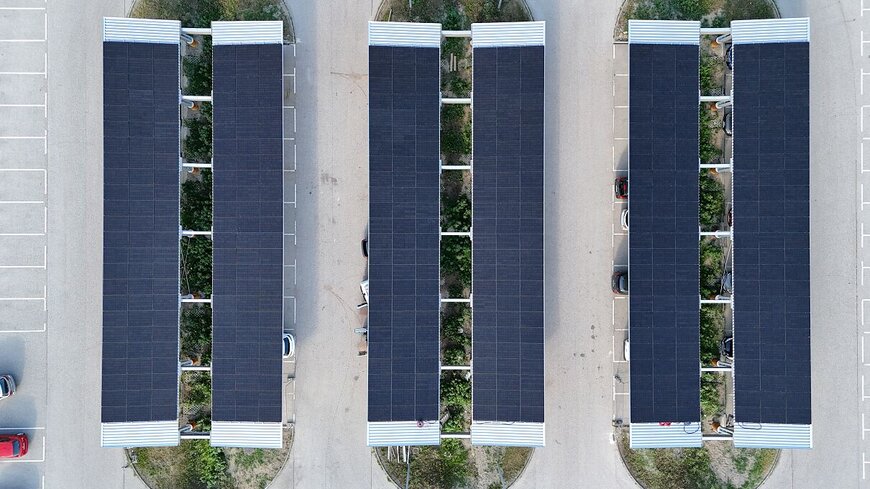
A key differentiator in ÖBB’s strategy is the utilization of existing rail infrastructure for energy generation. In 2025 alone, 30 new photovoltaic (PV) systems were commissioned, pushing the total to 144 solar installations across the country. These include specialized solutions such as adhesive solar modules on noise barriers and PV systems integrated into Park & Ride decks. By turning "passive" assets like station roofs and parking areas into active power plants, the railway minimizes land use while maximizing output, producing enough energy to power 275,000 households or circle the globe 2,000 times by train.
Combining Agriculture and Energy Production
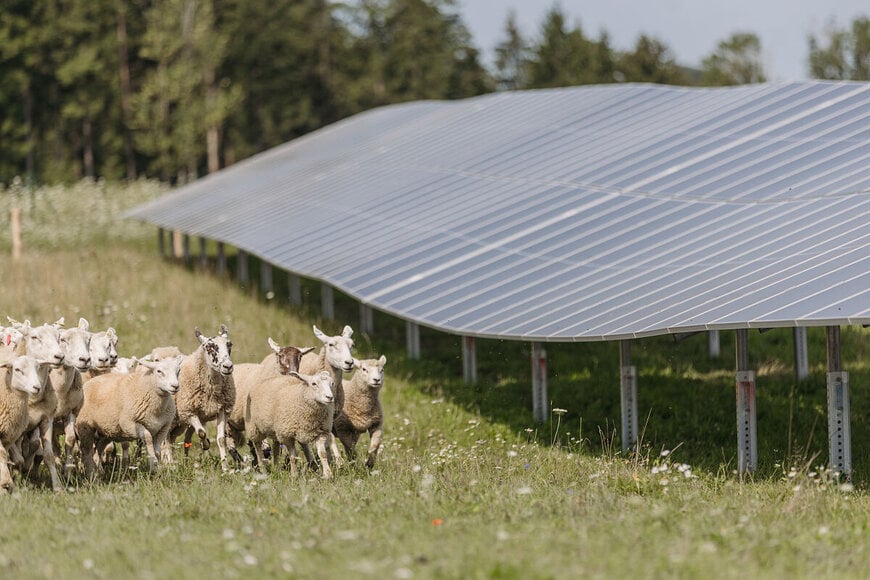
While traditional energy providers often face criticism for using agricultural land for solar farms, ÖBB is implementing "Agri-PV" technology to maintain a dual-purpose landscape. In 2026, a new facility in Burgenland will introduce a tracking system where 10,600 movable modules follow the sun’s path. This high-clearance design allows the ground below to remain fully viable for biological farming. Another system in Upper Austria already demonstrates this synergy by combining solar power generation with sheep grazing, fostering biodiversity while feeding green electricity directly into the 16.7 Hz traction power grid.
A Resilient and Diversified Energy Mix
The reliability of this green transition is anchored by a diverse energy mix. While solar power is expanding rapidly, hydropower remains the backbone of the system. Modernized plants, such as the century-old Spullersee facility, provide the necessary base load to ensure regional supply security. This multi-source approach—combining water, wind, and solar—is designed to increase the railway’s self-sufficiency in traction current from 60% to 80% in the coming years.
Long-term Economic and Ecological Advantages
Beyond environmental impact, this strategy serves as a blueprint for economic resilience. By reducing dependence on external energy suppliers, the railway shields itself from geopolitical tensions and price fluctuations on the energy market. Coupled with a 25% target increase in internal energy efficiency through network modernization and building optimization, this move toward independent green power production ensures that rail remains the most sustainable and economically stable backbone of public transport in Austria.
www.konzern.oebb.at
