
www.technology4environment.com
11
'26
Written on Modified on
SUEZ and PYREG Advance Sludge-to-Biochar Conversion
Integrated drying and pyrolysis system reduces volumes, destroys PFAS, and supports carbon sequestration in wastewater operations.
www.suez.com
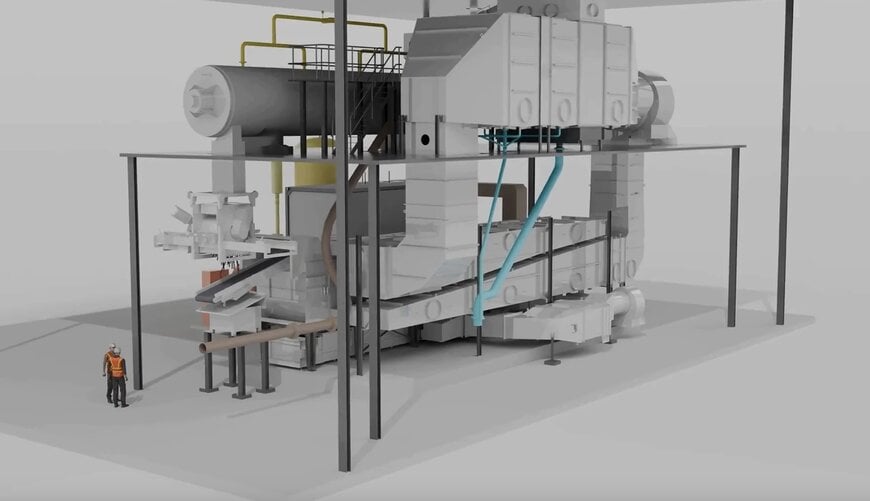
SUEZ and PYREG have introduced Pyrolis® S2B, an integrated pyrocarbonisation system designed to convert dewatered sewage sludge into biochar. The technology combines low-energy drying and high-temperature pyrolysis in a single, modular unit to reduce sludge volumes while enabling long-term carbon sequestration.
Approximately 340 million tonnes of industrial and agricultural effluents, including municipal wastewater sludge, are generated annually in France. Managing and valorising these residues remains a technical and environmental challenge, particularly as regulatory requirements tighten around emissions and contaminants.
Integrated Drying and Pyrolysis in One Unit
The Pyrolis S2B process integrates sludge drying and pyrolysis within a compact system architecture. Dewatered sludge is first treated using a low-energy drying technology developed by SUEZ, increasing solids content to approximately 90% dry matter. This level of dryness is critical for stable downstream thermal treatment.
The dried material is then processed in a PYREG reactor, where pyrolysis occurs at approximately 600°C in a low-oxygen atmosphere. Under these conditions, organic matter thermochemically decomposes into two primary outputs: a stable, carbon-rich biochar and a hydrocarbon-rich pyrolysis gas.
The system operates autothermally. The pyrolysis gas is fully oxidised at temperatures above 950°C, generating sufficient thermal energy to sustain both the drying phase and the pyrolysis process. This internal energy loop reduces the need for external fuel inputs and optimises overall plant energy efficiency. The high-temperature oxidation stage also destroys PFAS that may be present in the gas phase, addressing concerns related to persistent organic pollutants.
Waste Volume Reduction and Carbon Sequestration
By converting organic residues into biochar, the system significantly reduces the volume of sludge requiring disposal. More importantly, it stabilises the carbon contained in wastewater solids. According to the IPCC, biochar is recognised as a climate change mitigation pathway due to its capacity for long-term carbon storage when incorporated into soils or durable materials.
This approach contributes to a circular economy model in wastewater management, where waste streams are converted into reusable materials rather than landfilled or incinerated.
Applications in Agriculture and Construction
The resulting biochar is free from PFAS, microplastics, dioxins, and pharmaceutical residues. Its phosphorus content and porous structure enable use as a soil amendment, improving water retention, aeration, drainage, and microbial activity. These properties can enhance fertiliser efficiency and support soil regeneration in agricultural applications.
In the construction sector, biochar can be incorporated into concrete, cement, or asphalt formulations. In such applications, the embedded carbon contributes to lowering the material’s carbon footprint while maintaining structural performance. The durability of the sequestered carbon also allows biochar-based systems to qualify for carbon credit schemes under applicable regulatory frameworks.
Adaptability to Existing Infrastructure
Pyrolis S2B is designed as a modular system adaptable to various municipal and industrial wastewater infrastructures. By combining drying, thermal treatment, and emissions control within a single integrated solution, the technology offers wastewater operators a defined pathway to reduce sludge volumes, recover value from residual streams, and contribute to measurable carbon sequestration objectives.
www.suez.com
