
www.technology4environment.com
14
'25
Written on Modified on
SUEZ and CNRS Partner for Sustainable Water and Waste Solutions
Collaborative research initiative aims to innovate eco-friendly water and waste management, addressing global sustainability challenges through cutting-edge science and technology.
www.suez.com
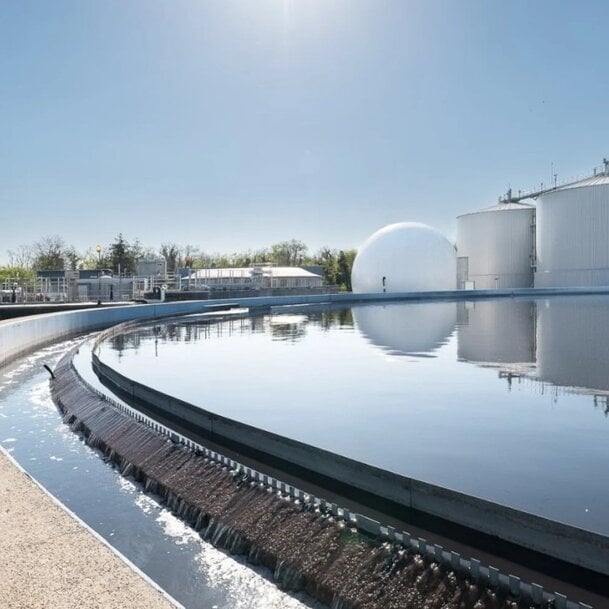
This framework agreement aims to pool together SUEZ’s innovation capabilities and the CNRS’ scientific excellence. The CNRS is one of the world's leading research organisations. It reinforces a fruitful collaboration, marked by more than thirty cooperative projects over the last 10 years, and joint ownership of a portfolio of 14 patents.
Since 2021, SUEZ teams have been working with researchers from the Institute of Condensed Matter Chemistry in Bordeaux (Bordeaux INP/CNRS/University of Bordeaux), a CNRS laboratory specialising in supercritical fluids, to develop a unique hydrothermal gasification facility that is now operational. This innovative process makes it possible to recover sewage sludge to produce renewable gas and recover the minerals from the sludge, while destroying micropollutants. Thanks to this process, organic waste is reduced by a factor of 15 to 20.
The SUEZ-CNRS pilot, which processes 5 litres of effluent per hour, was launched in January 2023 and has enabled initial operational tests of the continuous flow process (feed/extraction). This first successful test has led the SUEZ teams to begin construction of an industrial pilot with a treatment capacity of 150 litres of sludge per hour, at its Terre d'Aquitaine site in Saint-Selve (Gironde), with a view to its industrialisation.
Various areas of application in the water, waste and industrial decarbonisation sectors
As part of their partnership, SUEZ and the CNRS will pool their expertise together to address key issues for the future of sewage sludge management, seawater desalination, micropollutant treatment and PFAS (perfluoroalkyl compounds) reduction, while contributing to the decarbonisation of industrial sectors and the improvement of waste management processes via Artificial Intelligence (AI) and robotics, to the dismantling and transformation of materials.
The CNRS scientific teams, recognised for their excellence, will work in close collaboration with SUEZ experts to develop and market cutting-edge technologies, particularly in advanced water treatment and new methods for recycling and reusing materials, in collaboration with the entrepreneurial and start-up ecosystem.
This strategic agreement also places particular emphasis on dismantling ageing infrastructure and reducing the ecological footprint of industrial activities, while promoting solutions for the circular use of resources by all stakeholders.
www.suez.com
