
www.technology4environment.com
18
'26
Written on Modified on
Eiffage wins jacket foundation contract for the LanWin beta offshore platform
Through its subsidiary Smulders, the group will manufacture the foundation for this 2 GW converter platform connecting North Sea wind farms to the German grid.
www.eiffage.com
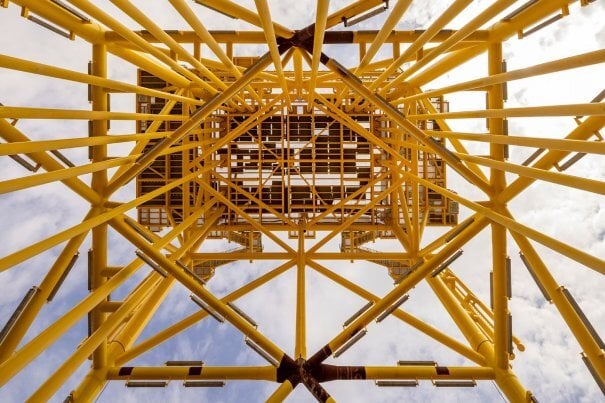
Eiffage, acting through Smulders, the Belgian subsidiary of Eiffage Métal, has been awarded a contract by Dragados Offshore to manufacture the jacket foundation for the LanWin beta offshore converter platform in Germany. LanWin beta is an essential component of LanWin2, a high-voltage direct current (HVDC) grid connection project in the German sector of the North Sea. The project marks a new milestone in the development of the offshore grid deployed by TenneT, which connects North Sea wind farms to onshore systems in the Netherlands and Germany. With a capacity of 2 GW, it will transport twice as much renewable electricity as previous projects, which were limited to 900 MW. Work is scheduled to begin in early 2027, with delivery planned for 2030.
Multi-site European manufacturing
The LanWin beta offshore converter platform will collect electricity generated by offshore wind farms and transmit it to Germany. To manufacture its jacket foundation, Smulders will draw on the expertise of several of its European sites: production will take place in Belgium and Poland, while final assembly and load-out will be carried out in the Netherlands.
Strengthening offshore power transmission
This contract adds to Smulders' portfolio in offshore power transmission infrastructure and reinforces its contribution to the development of Europe's offshore energy grid. According to Wim Vaes, Director of the Offshore Platforms Business Unit at Smulders, the growth of offshore wind power makes reliable power transmission infrastructure essential. The company will apply its expertise in complex offshore steel structures to the LanWin2 project for TenneT Germany, in close cooperation with its partners, and views this contract as a sign of customer trust in its teams and their capabilities.
Additional Context:
This section explains general principles of jacket foundations and offshore HVDC transmission not included in the original press release.
The choice of offshore foundation type depends particularly on water depth, soil conditions and the loads to be supported. Unlike monopiles, which are large single steel tubes driven into the seabed, a jacket foundation is a lattice structure made of welded steel tubes, generally with four legs anchored to the seabed by piles. This architecture offers a good strength-to-weight ratio to support heavy equipment, such as the topside module of a converter platform, while limiting exposure to waves and currents.
To transmit high power over long distances via submarine cable, high-voltage direct current is often preferred over alternating current, because alternating current cables generate significant capacitive currents that reduce transmissible power. Offshore converter platforms therefore convert the alternating current generated by wind farms into direct current, which is then converted back into alternating current onshore before being fed into the grid.
Edited by an industrial journalist, Lekshman Ramdas, with AI assistance.
www.eiffage.com
