
Hydrogen Combustion Capabilities for Aeroderivative Gas Turbines
GE Vernova validates the LM2500XPRESS and LM6000VELOX systems to operate on hydrogen fuel blends, establishing stable power generation for grid infrastructure.
www.gevernova.com
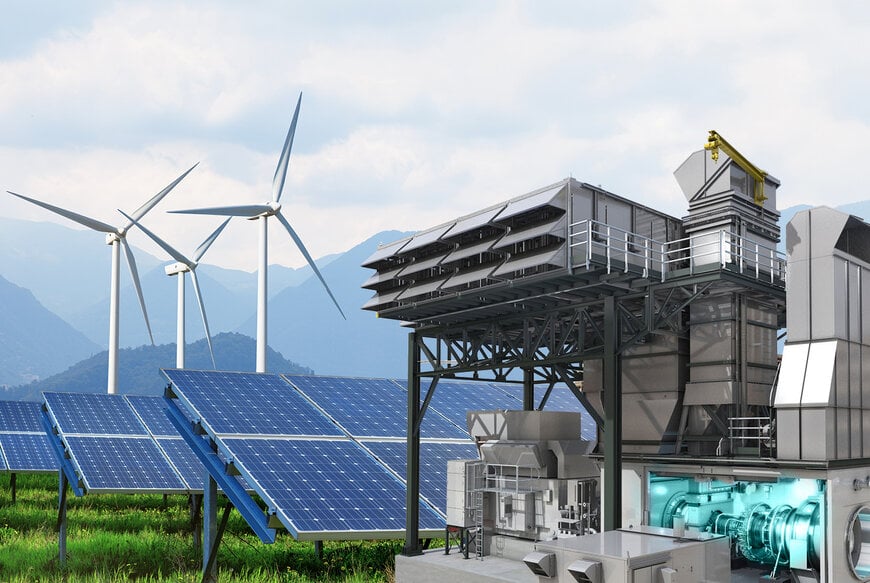
The deployment of hydrogen-ready aeroderivative gas turbine solutions provides operators with scalable systems to reduce carbon emissions in continuous energy infrastructure. To address grid stabilization requirements, new combustion validation tests have established parameters for utilizing higher hydrogen concentrations in modular power generation packages.
Stabilizing electric grids and meeting peak demand requires fast-starting, flexible power generation infrastructure capable of responding to changing system conditions. The core technical challenge in energy infrastructure involves mitigating carbon dioxide emissions without compromising the rapid-start reliability essential for municipal operators, data centers, and heavy industrial facilities. Gas turbines engineered from aviation technology must adapt to alternative fuels like hydrogen, demanding extensive validation of combustion stability and thermal management.
Technical Solution and Responsibilities
GE Vernova executes this mechanical adaptation through two aeroderivative gas turbine packages. The LM2500XPRESS system is validated for operation on fuel blends containing up to 50 percent hydrogen by volume utilizing a Dry Low Emission configuration, while retaining its ability to reach full power in five minutes or less. Concurrently, the LM6000VELOX gas turbine integrates a Singular Annular Combustion configuration, which has successfully completed testing to validate its 100 percent hydrogen fuel capability. GE Vernova's hydrogen combustion technology also enables existing gas turbines to be modified for high-concentration hydrogen operation.
Deployment and Implementation
The combustion testing operations were inaugurated at the Global Technology Center in Greenville, South Carolina, and announced during the COP31 programming in Antalya, Turkey, in November 2026. This dedicated aeroderivative testing facility provides the physical infrastructure to accelerate product testing and reduce development lead times for turbine modifications. The hydrogen combustion technology extends across the global fleet, building upon prior hydrogen blend deployments at testing sites and utility installations in the United States, Australia, and China.
Applications and Use Cases
Gas turbines operating on hydrogen support continuous industrial applications, including steel manufacturing, refining, and petrochemical processing. The systems provide the baseload and peaking power necessary for data centers, industrial cogeneration, and district heating networks. The deployment of this technology ensures a steady supply of power to industrial and municipal operators requiring operational flexibility and grid support.
Results and Expected Impact
The engineering implementation has enabled the global gas turbine fleet to surpass 11 million operating hours on hydrogen and hydrogen-blended fuels across more than 120 units. Regarding the operational mechanics of this integration, Cecilia Giovannelli, CEO of the Gas Power Aeroderivative gas turbine business at GE Vernova, details the technical rationale: "providing hydrogen-ready solutions that allow customers to lower carbon emissions while maintaining the rapid-start reliability essential for grid stabilization." The validated platforms establish a standardized pathway for heavy industry to transition fuel sources while maintaining mechanical performance and output predictability.
Edited by Maria Brueva, Induportals editor – adapted by AI.
