
www.technology4environment.com
03
'26
Written on Modified on
Building a solar park using low-emission steel
In its new German solar park, Vattenfall is using recycled, low-emission steel for the mounting structures, offering a 67 per cent CO2 reduction compared to conventional steel.
group.vattenfall.com
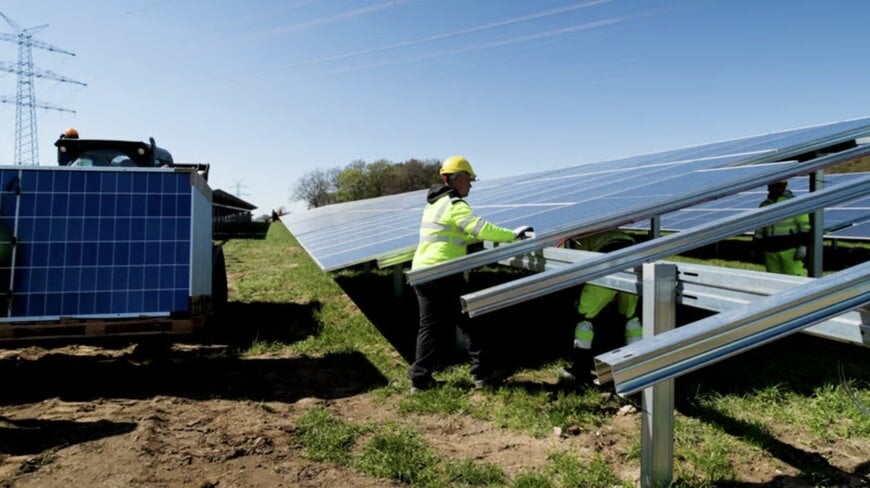
While utility-scale solar photovoltaic generation produces electricity free of direct operational emissions, the construction and balance-of-system phases of solar parks continue to account for a substantial portion of a project's total lifecycle carbon footprint. The structural steel racking and driven-pile foundations required to mount hundreds of thousands of solar modules have historically been produced through carbon-intensive, coal-fired blast furnace pathways. As European developers pursue comprehensive net-zero procurement standards across their generation assets, utility procurement programs are expanding their decarbonization criteria beyond low-carbon solar cells to include the embodied emissions of mounting substructures and balance-of-plant materials. Overcoming these upstream supply chain emissions requires adopting certified low-emission structural steels manufactured through renewable-powered electric arc furnace routes that deliver mechanical yield strength and corrosion resistance identical to conventional virgin structural steels.
Decarbonizing Balance-of-System Infrastructure with SSAB Zero
To address embodied carbon in ground-mounted photovoltaic systems, European utility Vattenfall partnered with Swedish steelmaker SSAB to implement low-emission steel mounting systems at the Juliusburg/Krukow solar park, located 45 minutes east of Hamburg, Germany. Within the Krukow section of the facility, the solar panel mounting racks and support substructures are fabricated using SSAB Zero structural steel.
SSAB Zero is produced from recycled scrap steel melted in electric arc furnaces energized exclusively by fossil-free electricity, effectively eliminating direct process emissions from smelting. Lasse Fast Jensen, Head of Sustainable Design and Sustainable Procurement at Vattenfall's Business Area Wind, noted that technical evaluations confirmed SSAB Zero matches conventional structural steel in tensile strength, yield behavior, and structural reliability, while keeping project cost impacts balanced relative to the significant lifecycle emission reductions achieved.
Commissioned in the summer of 2026, the 80-megawatt Juliusburg/Krukow facility generates approximately 80 gigawatt-hours of renewable electricity annually. Claus Wattendrup, Head of Solar & Batteries at Vattenfall, emphasized that corporate decarbonization must encompass the full raw material procurement chain, noting that using low-carbon steel substructures reduces national reliance on imported fossil fuels while establishing a cleaner material supply chain.
Cross-Sector Scaling Across Renewable Asset Classes
The deployment in the Krukow installation marks an expansion of Vattenfall’s broader circular and low-emission materials procurement strategy. Beyond ground-mounted utility solar fields, Vattenfall has integrated low-carbon steel into wind generation projects, including the Clashindarroch II onshore wind farm in the United Kingdom and the Nordlicht offshore wind cluster situated in the German North Sea.
Matts Nilsson, Vice President and Head of Sales at SSAB Europe, indicated that combining renewable power generation with low-carbon structural components reduces environmental impacts across the complete value chain. Nilsson noted that Vattenfall's adoption of SSAB Zero establishes commercial demand for green structural materials, accelerating industrial scaling of fossil-free steelmaking across the European continent.
Additional Context
This section details technical specifications and competitive benchmarking not included in the original product announcement.
In utility-scale ground-mounted solar installations governed by Eurocode 3 (EN 1993) and DIN EN ISO 1461 standards for structural steelwork and hot-dip galvanizing, mounting racks and ground piles must withstand dynamic wind-uplift loads, seismic movements, and soil-corrosion pressures over an operational design life exceeding thirty years. Ground-mount trackers and fixed-tilt tables typically utilize cold-formed C-channels, omega profiles, and torque tubes fabricated from high-strength low-alloy structural steels (such as S250GD, S350GD, or S420GD). SSAB Zero achieves verified Environmental Product Declarations (EPD) with Scope 1 and Scope 2 emissions below zero point zero five kilograms of carbon dioxide equivalent per kilogram of finished steel, compared to approximately two kilograms of carbon dioxide per kilogram typical of primary blast furnace–basic oxygen furnace (BF-BOF) production routes. To ensure multi-decade field durability against soil moisture and atmospheric salt mist, the low-carbon steel strip is treated with continuous hot-dip zinc-aluminum-magnesium alloy coatings (such as ZM310), which offer superior galvanic self-healing edge protection and slow atmospheric sacrificial consumption rates compared to conventional pure zinc galvanization.
Within the European low-emission structural steel sector, SSAB's scrap-based SSAB Zero and future hydrogen-reduced iron-ore product (SSAB Fossil-free) compete directly with low-carbon steel lines from ArcelorMittal (XCarb Recycled and Renewably Produced), Salzgitter AG (SALCOS green steel initiative), Voestalpine (greentec steel), and Tata Steel Europe (Zeremis). While competitors such as ArcelorMittal have secured supply agreements with tracker manufacturers such as Nextracker and PV Hardware for their Magnelis-coated XCarb steel, SSAB differentiates its offering by utilizing a certified zero-fossil-emission production perimeter covering internal scrap melting, rolling, and reheating processes using non-fossil fuel sources. As European developers face tightening European Union Corporate Sustainability Due Diligence Directives (CSDDD) and Taxonomy alignment criteria, sourcing independently verified low-carbon steel for structural balance-of-system components allows solar developers to secure favorable Environmental, Social, and Governance (ESG) financing terms and differentiate bids in competitive renewable capacity auctions.
