
www.technology4environment.com
26
'26
Written on Modified on
Scaling Electrochemical Direct Air Capture Through Industrial Automation
Siemens and Ucaneo collaborate to implement standardized control systems for a modular carbon removal facility.
www.siemens.com
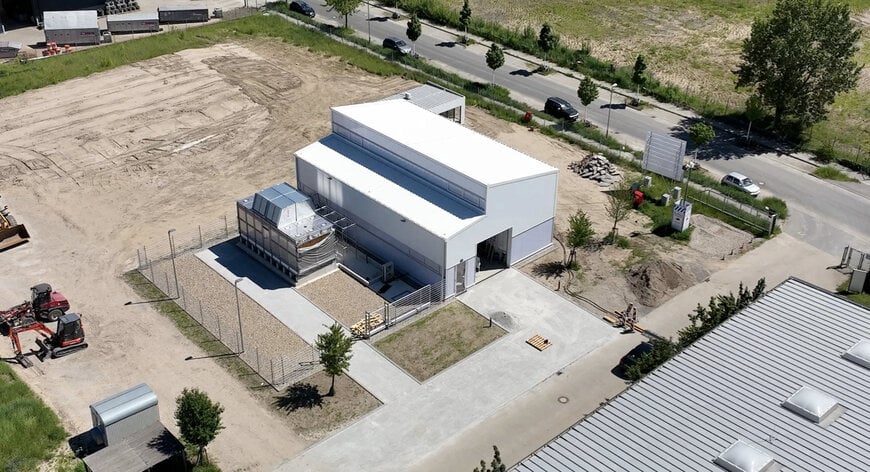
Siemens and Ucaneo are collaborating to implement scalable automation and digital infrastructure for an electrochemical direct air capture system. The partnership focuses on standardizing the extraction of carbon dioxide from ambient air for applications in aviation, chemical manufacturing, and carbon storage.
Roles and Industrial Context
Ucaneo provides the core electrochemical carbon removal process. Siemens acts as the automation partner, supplying control hardware, process simulation software, and drive technology. The cooperation addresses the engineering challenge of transitioning a direct air capture process from a pilot phase to a commercially viable scale. By integrating complementary expertise in chemical processing and industrial automation, the companies aim to create a replicable operational model for carbon extraction.
System Architecture and Technical Integration
The Ucaneo process utilizes an electrified electrochemical system designed to separate carbon dioxide from atmospheric air, yielding a gas with a purity exceeding 99.9 percent. Siemens supports this process by deploying process controllers and analytical instrumentation. For future plant designs, the integration will utilize advanced distributed control systems to manage process variables. The implementation of process simulation software allows for the validation of parameters in a virtual environment prior to physical deployment, mitigating engineering risks and verifying system interfaces during the scale-up phase.
Facility Deployment and Scaling
The initial industrial-scale facility is located in Berlin, Germany, with operations set to commence in July 2026. The plant operates with a design capacity of 150 metric tons of carbon dioxide per year. A portion of the extracted gas will be transported for permanent geological storage, establishing a verified carbon removal sequence. A subsequent commercial facility with approximately ten times the extraction capacity is currently in the engineering phase. The control architecture is structured as a standardized automation template, intended to allow licensed operators to replicate the system configuration globally while maintaining capital efficiency.
Industrial Applications and Process Outputs
The extracted carbon dioxide serves as a direct feedstock for industrial processes requiring non-fossil carbon, including the synthesis of methanol, sustainable aviation fuel, and food-grade applications. Complete process electrification enables the system to modulate energy consumption based on grid conditions and renewable energy availability. This technical deployment aligns with regulatory frameworks such as the European Union ReFuelEU aviation mandate, which specifies increasing quotas for synthesized aviation fuels, and the Carbon Removal Certification Framework. Through this standardized automation approach, the system is engineered to achieve operational stability, high continuous throughput, and consistent gas purity across all deployed sites.
Edited by Natania Lyngdoh, Induportals editor, assisted by AI.
www.siemens.com
