
www.technology4environment.com
06
'26
Written on Modified on
Radar Technology for Maintenance-Free Precipitation Measurement
Vaisala introduces the RM60 sensor to improve accuracy and accessibility within the automotive data ecosystem and meteorological networks.
www.vaisala.com
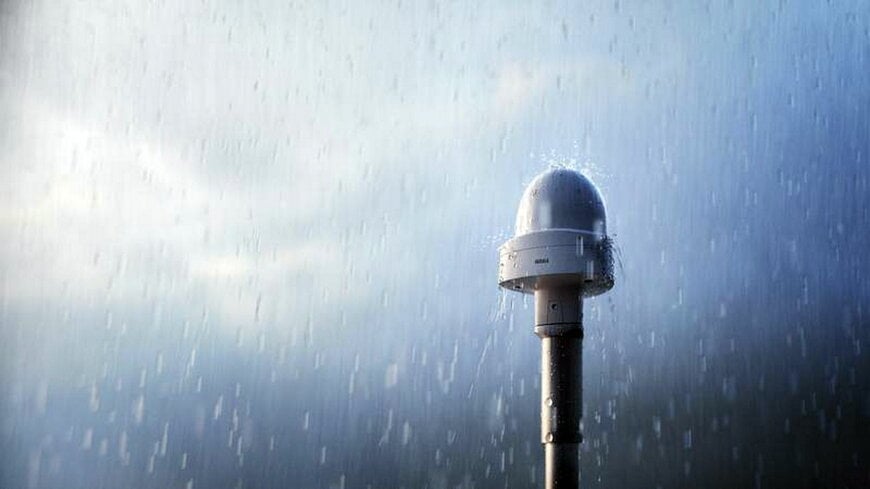
The Vaisala PRECICAP® Radar Precipitation Sensor RM60 is a maintenance-free measurement device designed to provide high-fidelity rainfall and snowfall data for professional networks. By utilizing patented radar technology instead of mechanical catchment, the sensor addresses systematic measurement biases and eliminates the need for field-based servicing in hydrology, meteorology, and renewable energy sectors.
Overcoming Systematic Measurement Bias
Conventional precipitation measurement relies heavily on mechanical gauges, such as tipping buckets, which are subject to physical limitations. Research published in Weather, the journal of the Royal Meteorological Society (Dunn et al., 2025), indicates that traditional gauges consistently under-report precipitation volumes. These losses range from a few percent in ideal conditions to nearly 50% in demanding environments. In exposed sites or during snowfall, recorded amounts can fall below one-third of the actual precipitation.
The RM60 addresses these inaccuracies by moving away from catchment-based collection. Instead, it measures individual hydrometeors — raindrops, snowflakes, and hailstones — as they pass through a radar field. This method bypasses the wind-induced errors, evaporation, and freezing issues that typically degrade the data quality of mechanical systems. By capturing the size distribution and velocity of particles, the sensor provides a more granular view of intensity and precipitation type, offering a more reliable ground truth for a modern digital supply chain of environmental data.
Enhancing Network Coverage in Remote Locations
A primary challenge in flood forecasting and hydrological modeling is the lack of data from high-risk, remote areas. Conventional gauges require at least four maintenance visits per year to ensure operational integrity, making them cost-prohibitive for mountain slopes or isolated catchments. The RM60 is engineered to be truly maintenance-free throughout its service life, requiring no cleaning or field calibration.
This operational autonomy allows infrastructure operators and meteorologists to deploy sensors in previously unmonitored locations. The device is compatible with compact solar panels and standard mounting masts, reducing the infrastructure footprint. By eliminating recurring field visits and consumables, the total cost of ownership for an RM60 station is significantly lower than that of traditional tipping-bucket stations.
Technical Validation and Field Performance
The reliability of the radar-based approach is supported by over 700,000 hours of field data collected since 2020. Vaisala has deployed dozens of units across diverse climates, ranging from subarctic winters to high-wind Atlantic environments and tropical regions. This testing phase confirmed the sensor's ability to maintain data continuity without human intervention, even in extreme weather conditions where mechanical systems frequently fail.
For technical users in hydropower and solar energy, the RM60 provides the high-frequency data necessary for reservoir management and resource assessment. In the broader automotive data ecosystem, accurate real-time precipitation data serves as a critical input for safety systems and autonomous vehicle routing, where understanding road surface conditions is paramount.
Comparison with Traditional Catchment Systems
While mechanical gauges remain a standard in many legacy networks, the RM60 represents a shift toward solid-state sensing. Unlike acoustic sensors or traditional buckets, the radar-based PRECICAP® technology differentiates between precipitation types with higher precision. It functions without the moving parts that are prone to mechanical wear or blockages from debris and ice. This makes it a specialized tool for critical infrastructure where data gaps during extreme events — such as flash floods or debris flows — can have significant safety and economic consequences.
Edited by Evgeny Churilov, Induportals Media - Adapted by AI.
www.vaisala.com
