
www.technology4environment.com
30
'26
Written on Modified on
Neoen Commences Construction on Major Solar Farm Projects in Ireland
Following RESS 4 auction success, Neoen is launching 195 MWp of new solar capacity to power 46,000 homes while enhancing local biodiversity and community funds.
neoen.com
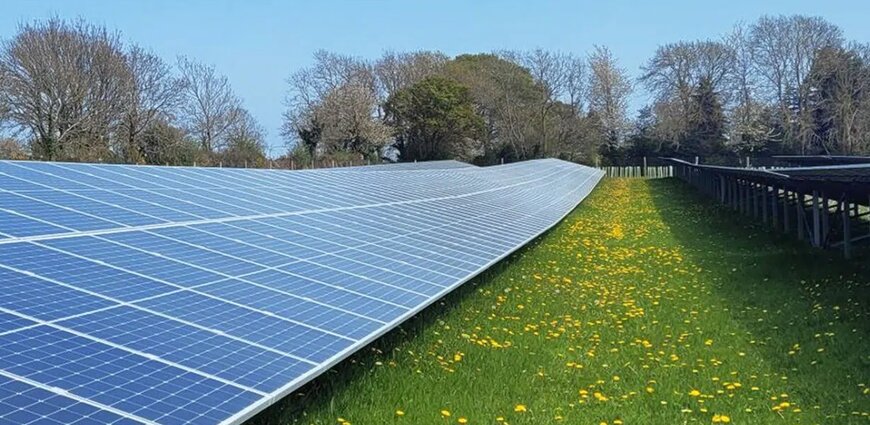
Neoen is solidifying its position as a frontrunner in the Irish energy market by initiating the construction of the 162 MWp Garr and 33 MWp Johnstown North solar farms. By securing contracts through the 2024 Renewable Electricity Support Scheme (RESS 4) auction, the company has demonstrated a competitive edge in project viability and grid integration. This expansion brings Neoen’s total Irish capacity in operation or under construction to 410 MW, a figure that highlights its ability to deliver large-scale infrastructure ahead of many regional competitors. Unlike smaller developers, Neoen’s diverse portfolio and 1.8 GW development pipeline across wind, solar, and battery storage allow it to address Ireland's rising electricity demand more comprehensively, particularly for the power-intensive data center sector.
Strategic Infrastructure and Regional Impact
The 162 MWp Garr Solar Farm represents a significant milestone as Neoen’s first venture into County Offaly. Once operational in 2029, it will rank among Ireland’s largest solar installations, capable of powering over 38,000 homes and offsetting 51,000 tonnes of carbon emissions annually. The project involves a sophisticated grid connection strategy, utilizing Omexom for solar arrays and TLI Group for onsite substation construction to link directly into the EirGrid transmission network. Simultaneously, the 33 MWp Johnstown North project in County Wicklow will bolster the local distribution network operated by ESBN. Expected to be operational by 2028, this third Wicklow asset will provide clean energy to 8,000 homes while preventing 10,500 tonnes of annual CO2 emissions.
Integrated Sustainability and Land Management
Beyond mere energy generation, Neoen differentiates its assets through a dual-purpose land use model that integrates agricultural and ecological benefits. Both the Garr and Johnstown North sites will employ sheep grazing as a natural method for vegetation control, maintaining the land's agricultural utility. Furthermore, the projects incorporate specific biodiversity enhancements such as native planting, insect hotels, and nesting boxes for birds and bats. These initiatives, paired with dedicated Community Benefit Funds, ensure that the solar farms provide long-term environmental and social value that exceeds standard industrial requirements, aligning the company's growth with Ireland’s broader 2030 climate targets.
Edited by Evgeny Churilov, Induportals Media - Adapted by AI.
www.neoen.com
