
www.technology4environment.com
22
'26
Written on Modified on
Ontario Solar Projects Under Long-Term Supply Contracts
Neoen and IESO partner with Garden River and Matachewan First Nations to deploy 318 MWp solar capacity under long-term procurement framework.
neoen.com
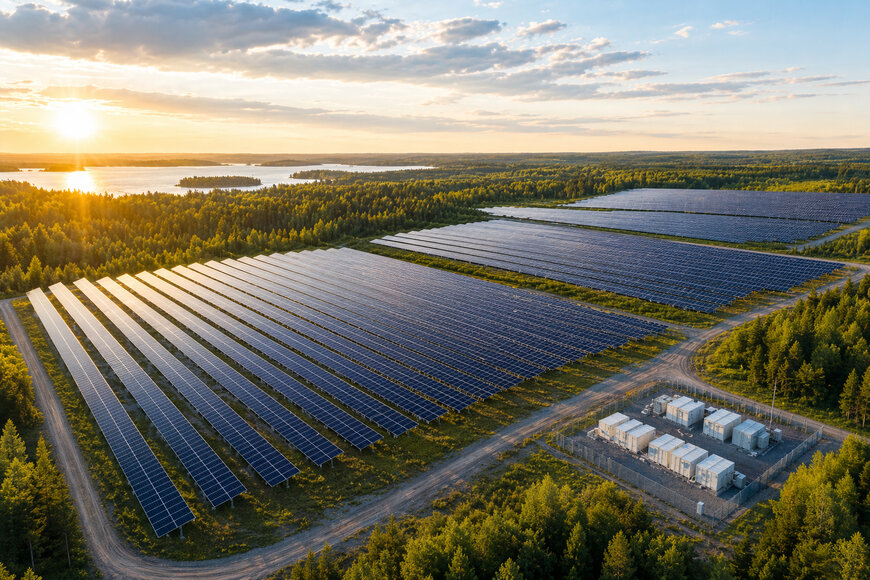
Neoen has secured long-term power supply agreements with Ontario’s grid operator to develop two utility-scale solar projects, integrating Indigenous equity partnerships into the province’s expanding renewable energy infrastructure.
Context of the Cooperation
The cooperation involves Neoen, the Independent Electricity System Operator (IESO), and two Indigenous partners: Garden River First Nation and Matachewan First Nation.
IESO awarded 20-year contracts through its Long-Term Energy Supply procurement process, designed to secure stable, dispatchable, and non-emitting generation capacity. The initiative addresses rising electricity demand in Ontario driven by electrification and industrial growth.
The involvement of First Nations through 50% equity participation reflects regulatory and policy frameworks in Canada promoting Indigenous ownership in energy infrastructure projects, particularly for grid-scale renewable assets.
Technical Solution and Responsibilities
The cooperation covers the development of two photovoltaic solar farms with a combined installed capacity of 318 MWp / 250 MWac.
- The Dunns Valley project (253 MWp / 200 MWac) is designed as a high-capacity utility-scale installation, contributing significant baseload-equivalent solar generation.
- The Paradis Bay project (65 MWp / 50 MWac) operates at a smaller scale but follows similar system architecture.
Neoen is responsible for project development, engineering, procurement, and integration into Ontario’s grid infrastructure. The IESO defines contractual and grid compliance requirements, including output delivery and reliability standards.
Equity partners Garden River First Nation and Matachewan First Nation participate in governance and ownership, contributing to project oversight and long-term asset management alignment.
The projects operate under full-output contracts, meaning 100% of generated electricity is supplied to the grid, ensuring predictable revenue streams and facilitating financing.
Deployment and Grid Integration
Both solar farms will be located in Ontario, near Dunns Valley and Paradis Bay. Construction is scheduled to begin in 2028, with phased commissioning targeted for 2029 and 2030.
Grid integration involves connection to Ontario’s transmission network under IESO specifications, including synchronization, voltage regulation, and compliance with grid stability requirements. The installations are expected to operate within a broader digital infrastructure for grid monitoring and dispatch coordination.
Applications and Use Cases
The projects support multiple use cases within the provincial energy system:
Equity partners Garden River First Nation and Matachewan First Nation participate in governance and ownership, contributing to project oversight and long-term asset management alignment.
The projects operate under full-output contracts, meaning 100% of generated electricity is supplied to the grid, ensuring predictable revenue streams and facilitating financing.
Deployment and Grid Integration
Both solar farms will be located in Ontario, near Dunns Valley and Paradis Bay. Construction is scheduled to begin in 2028, with phased commissioning targeted for 2029 and 2030.
Grid integration involves connection to Ontario’s transmission network under IESO specifications, including synchronization, voltage regulation, and compliance with grid stability requirements. The installations are expected to operate within a broader digital infrastructure for grid monitoring and dispatch coordination.
Applications and Use Cases
The projects support multiple use cases within the provincial energy system:
- Utility-scale renewable generation for grid supply
- Peak demand support during high-load periods
- Integration with future storage and hybrid systems
- Contribution to decarbonization targets in industrial and residential sectors
The annual output is estimated at 475 GWh, sufficient to supply electricity to over 50,000 households.
Expected Impact
The cooperation increases Ontario’s renewable generation capacity while aligning with procurement mechanisms that prioritize long-term price stability and grid reliability.
From a system perspective, large-scale photovoltaic integration reduces dependency on fossil-based generation and supports load balancing when combined with storage assets. Neoen’s broader Canadian portfolio, approaching 1 GW of solar and storage capacity, indicates a scaling strategy based on standardized project development and grid-compatible system design.
Edited by an industrial journalist Sucithra Mani with AI assistance.
www.neoen.com
Expected Impact
The cooperation increases Ontario’s renewable generation capacity while aligning with procurement mechanisms that prioritize long-term price stability and grid reliability.
From a system perspective, large-scale photovoltaic integration reduces dependency on fossil-based generation and supports load balancing when combined with storage assets. Neoen’s broader Canadian portfolio, approaching 1 GW of solar and storage capacity, indicates a scaling strategy based on standardized project development and grid-compatible system design.
Edited by an industrial journalist Sucithra Mani with AI assistance.
www.neoen.com
