
www.technology4environment.com
15
'26
Written on Modified on
Battery Storage Systems for Grid Flexibility
Centrica and Omexom deploy 40MW battery storage systems in Sweden to support grid balancing and renewable energy integration.
www.centrica.com
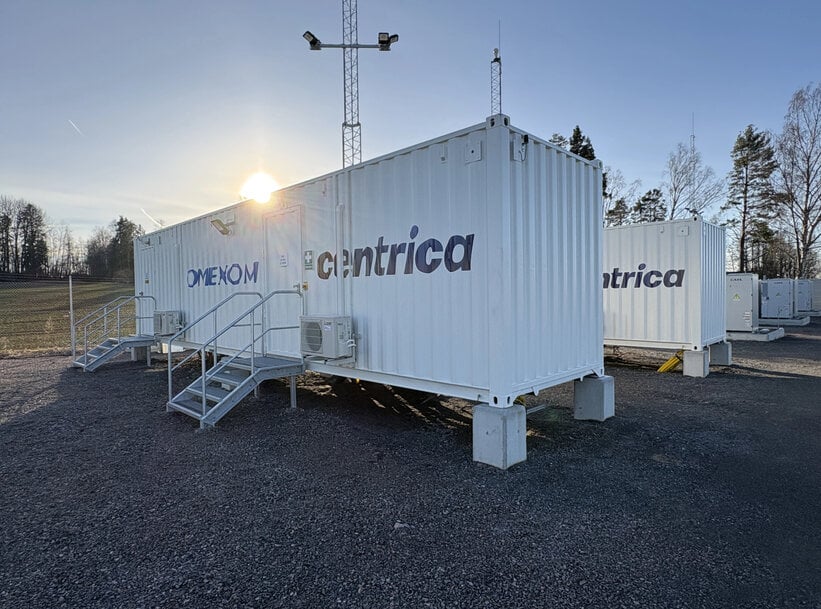
Centrica, in partnership with Omexom, has deployed two battery energy storage systems (BESS) in Borlänge, Sweden, designed to provide grid flexibility and support renewable energy integration. The installations address variability in electricity generation and demand within the national power system.
Context of the Cooperation
Centrica is expanding its portfolio of low-carbon energy assets, with a focus on flexible infrastructure such as battery storage. The company is supported by Omexom, which acts as engineering, procurement, and construction (EPC) contractor.
The cooperation responds to increasing grid instability caused by intermittent renewable generation, particularly from wind and solar sources. Addressing these fluctuations requires systems capable of rapid response and bidirectional energy flow, making battery storage a key component of modern digital infrastructure for energy systems.
Technical Solution and Responsibilities
The project consists of two BESS installations with a combined power capacity of 40MW and an estimated annual output of approximately 21,900MWh. The systems are designed to store excess electricity during periods of low demand and discharge it during peak consumption.
Omexom was responsible for system engineering, integration, grid compliance, and commissioning. This included performance testing to ensure alignment with Swedish grid codes and operational standards.
Centrica Energy oversees asset optimisation, using real-time control systems to adjust battery charge and discharge cycles. This optimisation is based on grid conditions, electricity pricing signals, and renewable generation availability. The approach enables dynamic participation in ancillary services such as frequency regulation and load balancing.
Deployment and Integration
Both systems are located in Borlänge, southern Sweden, and have been integrated into the national grid infrastructure. The deployment followed a standard EPC lifecycle, including design, installation, testing, and commissioning phases.
Post-commissioning, Omexom will provide operational management and maintenance services over a ten-year period. The systems are connected to existing grid nodes, enabling seamless interaction with transmission and distribution networks.
Applications and Use Cases
The BESS installations support multiple applications within the energy sector, including:
- Frequency stabilisation and grid balancing
- Peak load management
- Integration of intermittent renewable energy sources
- Energy arbitrage based on demand fluctuations
These functions contribute to improved process stability and more efficient utilisation of renewable generation assets.
Results and Expected Impact
With a combined capacity of 40MW, the systems can supply electricity equivalent to approximately 1,100 households annually. More significantly, their operational value lies in their ability to respond within milliseconds to grid signals, enhancing system reliability.
The project contributes to Centrica’s broader investment programme in low-carbon technologies, including nuclear, hydrogen, solar, and battery storage. By integrating flexible storage systems, the cooperation supports a more stable and responsive electricity network without requiring major changes to existing generation infrastructure.
Edited by an industrial journalist Sucithra Mani with AI assistance.
www.centrica.com
Results and Expected Impact
With a combined capacity of 40MW, the systems can supply electricity equivalent to approximately 1,100 households annually. More significantly, their operational value lies in their ability to respond within milliseconds to grid signals, enhancing system reliability.
The project contributes to Centrica’s broader investment programme in low-carbon technologies, including nuclear, hydrogen, solar, and battery storage. By integrating flexible storage systems, the cooperation supports a more stable and responsive electricity network without requiring major changes to existing generation infrastructure.
Edited by an industrial journalist Sucithra Mani with AI assistance.
www.centrica.com
