
www.technology4environment.com
10
'26
Written on Modified on
Biowaste Pre-Treatment Enhances Anaerobic Digestion Efficiency
SUEZ develops Digelis FoodWaste technology to reduce water use and increase biogas yield in anaerobic digestion systems.
www.suez.com
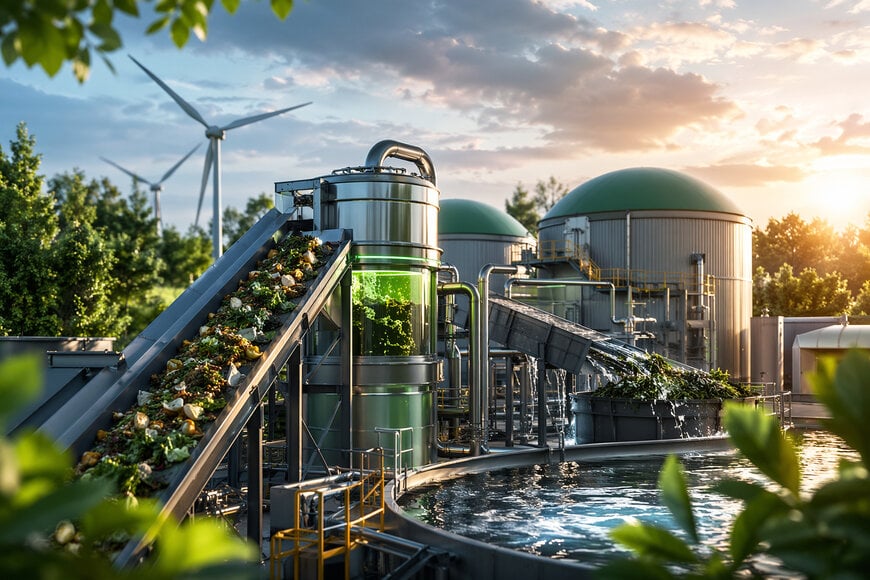
SUEZ has introduced a modular biowaste pre-treatment technology designed to improve the efficiency of anaerobic digestion processes. The system optimizes water usage and enhances biogas production while improving the quality of digestate for agricultural applications.
Addressing rising biowaste treatment demand
The introduction of mandatory biowaste sorting regulations in France has increased the volume of organic waste requiring treatment. In 2023 alone, approximately 9.7 million tonnes of food waste were generated, excluding agricultural residues. This has intensified the need for scalable and resource-efficient treatment technologies.
Anaerobic digestion is a widely adopted method for biowaste recovery, producing biogas and digestate. However, conventional pre-treatment stages particularly depackaging and sanitisation are resource-intensive and require significant water input.
Process design and operational mechanism
The Digelis FoodWaste system modifies the pre-treatment phase by leveraging the intrinsic moisture content of biowaste, which averages around 60%. This reduces the need for external water inputs while maintaining process efficiency.
The system operates through three sequential stages prior to anaerobic digestion:
- Depackaging involves shredding biowaste into fragments larger than 5 cm, enabling improved access to organic material.
- Biological digestion takes place in a reactor maintained at 55 °C, where accelerated fermentation promotes the release of internal water and ensures sanitisation by limiting pathogen proliferation.
- Mechanical separation then removes inert contaminants, isolating organic fractions suitable for downstream anaerobic digestion.
- This integrated pre-treatment approach ensures compatibility with existing anaerobic digestion infrastructure.
Measurable performance improvements
Initial semi-industrial results demonstrate quantifiable gains in both energy and resource efficiency. The process delivers up to 5% higher biogas output compared to conventional pre-treatment methods, indicating improved conversion efficiency within the anaerobic digestion stage.
In addition, digestate volume is reduced by up to 40%, resulting in a more concentrated output with enhanced agronomic value. The elimination of additional water input further reduces operational resource consumption and wastewater generation.
These improvements position the technology within the broader context of the circular economy, where waste streams are optimized for energy recovery and nutrient reuse.
Demonstration and scalability
Following approximately a decade of research and development, the technology is currently deployed at a semi-industrial demonstrator facility in Ombrée d’Anjou, France. The installation is designed to process up to 2,000 tonnes of biowaste annually.
The modular configuration enables integration into existing facilities, supporting incremental upgrades rather than requiring full system replacement. This approach facilitates adoption across municipal and industrial waste treatment operations.
Role in the digital supply chain of waste management
The Digelis FoodWaste system contributes to a more efficient digital supply chain in waste management by improving input consistency and process predictability in anaerobic digestion plants. Reduced variability in moisture content and contaminant levels enhances downstream process control and energy yield forecasting.
Positioning within biowaste treatment technologies
Pre-treatment optimization is a critical factor in anaerobic digestion performance. Compared to conventional systems that rely on external water addition and separate sanitisation stages, the Digelis approach integrates biological and mechanical processes to reduce inputs while improving outputs.
By combining water efficiency with increased renewable energy generation, the technology aligns with regulatory and operational goals related to resource conservation and low-carbon energy production.
Edited by an industrial journalist Sucithra Mani with AI assistance.
www.suez.com
Initial semi-industrial results demonstrate quantifiable gains in both energy and resource efficiency. The process delivers up to 5% higher biogas output compared to conventional pre-treatment methods, indicating improved conversion efficiency within the anaerobic digestion stage.
In addition, digestate volume is reduced by up to 40%, resulting in a more concentrated output with enhanced agronomic value. The elimination of additional water input further reduces operational resource consumption and wastewater generation.
These improvements position the technology within the broader context of the circular economy, where waste streams are optimized for energy recovery and nutrient reuse.
Demonstration and scalability
Following approximately a decade of research and development, the technology is currently deployed at a semi-industrial demonstrator facility in Ombrée d’Anjou, France. The installation is designed to process up to 2,000 tonnes of biowaste annually.
The modular configuration enables integration into existing facilities, supporting incremental upgrades rather than requiring full system replacement. This approach facilitates adoption across municipal and industrial waste treatment operations.
Role in the digital supply chain of waste management
The Digelis FoodWaste system contributes to a more efficient digital supply chain in waste management by improving input consistency and process predictability in anaerobic digestion plants. Reduced variability in moisture content and contaminant levels enhances downstream process control and energy yield forecasting.
Positioning within biowaste treatment technologies
Pre-treatment optimization is a critical factor in anaerobic digestion performance. Compared to conventional systems that rely on external water addition and separate sanitisation stages, the Digelis approach integrates biological and mechanical processes to reduce inputs while improving outputs.
By combining water efficiency with increased renewable energy generation, the technology aligns with regulatory and operational goals related to resource conservation and low-carbon energy production.
Edited by an industrial journalist Sucithra Mani with AI assistance.
www.suez.com
