
www.technology4environment.com
24
'26
Written on Modified on
OMV Drives Innovation for Sustainable Aviation at University of Leoben
OMV partners with the Technical University of Leoben to advance Europe’s unique research infrastructure, accelerating the industrialization of sustainable aviation fuels through technology.
www.omv.com
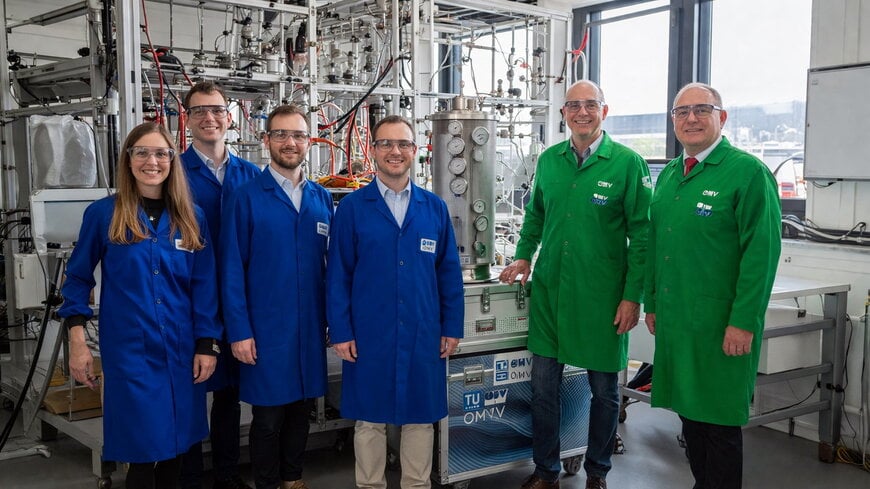
The future of carbon-neutral flight is currently being engineered in Austria through a unique industrial-academic alliance. While many energy companies are exploring alternative fuels, the partnership between OMV and the Technical University of Leoben distinguishes itself by establishing Europe's most flexible and technologically integrated research infrastructure. Unlike standardized pilot plants, this facility — housed in a dedicated university building — is designed to test various process routes simultaneously, providing a competitive edge in identifying the most cost-effective paths to decarbonizing the aviation sector.
Bridging the Gap Between Lab Research and Industrial Scale
The primary challenge facing Sustainable Aviation Fuel (SAF) today is that current production methods remain inefficient and significantly more expensive than traditional fossil-based kerosene. To overcome these barriers, the Leoben facility integrates physical experimental work with advanced digital tools. By utilizing state-of-the-art process simulations and machine learning models, the team can predict how fuel formulas will behave at an industrial scale. This digital-twin approach significantly reduces the financial risks associated with scaling up new technologies and accelerates development cycles faster than traditional trial-and-error methods.
A Strategic Hub for European Energy Sovereignty
This collaboration combines OMV’s industrial expertise with the university’s scientific excellence to address the entire SAF value chain. Supported by funding from the Austrian Federal Ministry of Innovation, Mobility, and Infrastructure, the project positions the Styrian research scene as a central innovation hub for civil aviation. The facility's work is essential for meeting the goals of the ReFuelEU Aviation initiative, as SAF can be integrated into existing aircraft and airport infrastructure without modifications. By achieving carbon emission reductions of over 80% across the fuel's lifecycle, this research is a critical component of the broader strategy to reach net-zero emissions by 2050.
Edited by Evgeny Churilov, Induportals Media - Adapted by AI.
www.omv.com
