
www.technology4environment.com
16
'26
Written on Modified on
Equinor Signs Bio-Methanol Supply Deal with Wallenius Wilhelmsen
Two-year agreement will supply bio-methanol bunkers in Zeebrugge and Antwerp for dual-fuel RoRo vessels supporting lower-carbon maritime logistics.
www.equinor.com
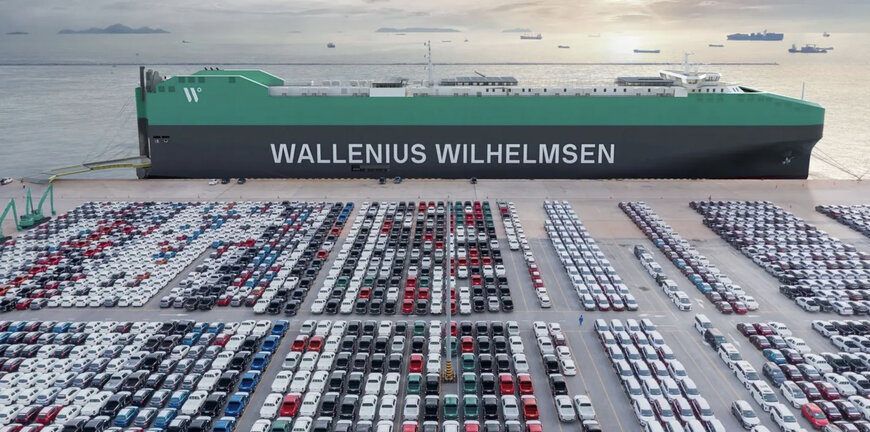
For maritime transport and vehicle logistics applications, Equinor has signed a two-year bio-methanol supply agreement with Wallenius Wilhelmsen to support the use of low-carbon fuels in roll-on/roll-off (RoRo) shipping operations.
Bio-Methanol for Maritime Transport
Equinor has entered into a two-year supply agreement with Wallenius Wilhelmsen, a global operator in vehicle logistics and RoRo shipping, to provide bio-methanol bunker fuel for a new generation of dual-fuel methanol vessels.
The agreement supports the increasing adoption of alternative marine fuels aimed at reducing greenhouse gas emissions in the shipping sector. Wallenius Wilhelmsen will use the fuel in its dual-fuel methanol-powered RoRo vessels, which transport cars, trucks, and heavy machinery between production sites and international markets.
Fuel deliveries will take place at the Ports of Zeebrugge and Antwerp, two major European maritime hubs, with supplies scheduled to begin in late 2026.
Supporting Decarbonization in Shipping
Bio-methanol is gaining attention in the maritime sector as a fuel that can be integrated into existing shipping infrastructure while offering lower lifecycle emissions compared with conventional marine fuels.
Alex Grant, Senior Vice President of Crude, Products and Liquids at Equinor, explained the role of the agreement in expanding the marine fuel market: “Interest in bio-methanol continues to grow as a practical and scalable pathway for reducing emissions from shipping. This partnership represents another step in expanding Equinor’s supply of bio-based methanol to the marine sector.”
Equinor has previously signed bio-methanol supply agreements with Maersk and Norwegian Cruise Line (NCL) as part of its strategy to expand availability of low-carbon fuels for maritime applications.
Logistics Sector Transition to Low-Carbon Fuels
The adoption of bio-methanol is expected to support Wallenius Wilhelmsen’s strategy to reduce emissions across its ocean transport services and provide lower-emission logistics solutions to customers.
Xavier Leroi, Chief Operating Officer Shipping Services at Wallenius Wilhelmsen, noted that securing alternative fuels is essential for scaling decarbonization in maritime transport: “Securing low-carbon bio-methanol supports the decarbonization of our ocean operations while strengthening our ability to deliver lower-emission end-to-end logistics services.”
Bio-Methanol Production and Certification
The bio-methanol supplied under the agreement will be produced using methanol from Equinor’s facility at Tjeldbergodden in Norway combined with biogas certificates derived from captured biogas originating from manure and other biomass sources.
Production follows a mass-balance method, where biomethane in the gas grid is attributed to methanol production in accordance with the EU Renewable Energy Directive.
This approach allows bio-methanol to be produced in existing industrial plants using current infrastructure, enabling faster scaling of production without the need for new large-scale facilities. It also enables the capture of methane emissions that could otherwise be released from untreated manure feedstock.
As the shipping industry continues to evaluate alternative fuels such as bio-methanol, ammonia, and synthetic fuels, supply agreements like this illustrate how fuel producers and logistics operators are developing supply chains for lower-carbon maritime transport.
Edited by industrial journalist, Natania Lyngdoh — AI-Powered.
www.equinor.com
