
www.technology4environment.com
09
'26
Written on Modified on
SUEZ Expands Operation of Valserhône Energy-from-Waste Plant
A 10-year operating contract will enhance renewable energy generation, resource recovery and environmental performance at the Valserhône waste-to-energy facility.
www.suez.com
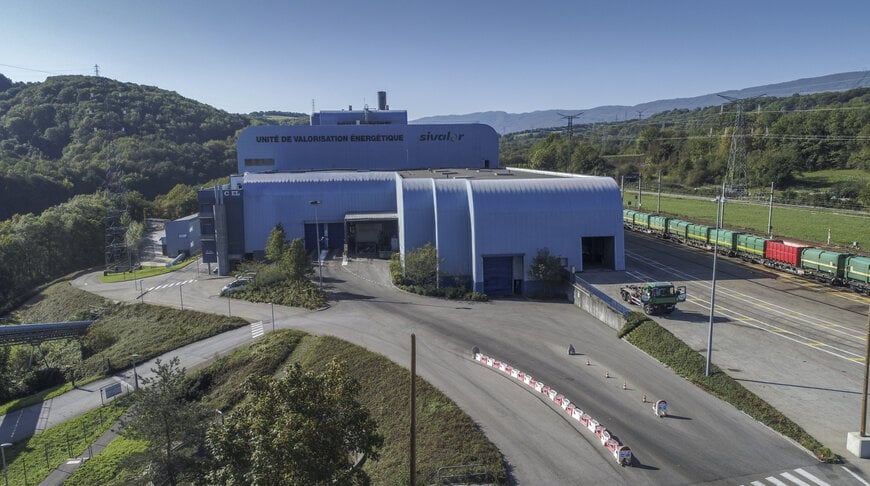
On March 6, 2026, the intermunicipal energy-from-waste authority SIVALOR renewed its partnership with SUEZ by awarding the company a new contract to operate the Valserhône Energy-from-Waste plant. The agreement runs for 10 years beginning in September 2027.
The facility processes approximately 125,000 tonnes of household and similar waste each year, converting it into about 70,000 MWh of electricity annually. In addition, the plant will soon supply more than 17,000 MWh of heat each year to a 12-kilometre district heating network being developed in the municipality of Valserhône.
SIVALOR and SUEZ share the objective of turning the facility into a European benchmark in environmental, energy and industrial performance. SUEZ currently operates 34 energy-recovery plants in France, positioning the company as a major operator in the national waste-to-energy sector.
Regional energy recovery from household waste
SIVALOR coordinates energy recovery from household waste across a territory serving more than 434,000 residents.
The organisation brings together three urban communities — Pays de Gex, Haut Bugey and Annemasse Les Voirons — as well as six intermunicipal communities: Terre Valserhône, Genevois, Usses et Rhône, Pays Rochois, Vallée Verte, and Arve et Salève, representing 146 municipalities located in the Ain and Haute-Savoie departments.
In addition to managing waste recovery infrastructure, SIVALOR also promotes responsible waste management practices and raises public awareness about environmental challenges related to waste generation.
A long-term partnership focused on performance
Under the 10-year global performance contract, SUEZ and SIVALOR aim to transform the Valserhône facility into a “resource factory” capable of improving environmental performance, increasing energy efficiency and strengthening industrial reliability.
Several technical measures will be implemented to support this objective.
Increasing energy self-sufficiency
To improve the site’s energy performance, renewable energy production will be expanded while reducing the electricity consumption of plant equipment.
A 4,500 m² photovoltaic installation will be deployed on the roof of the bottom-ash treatment facility, generating up to 885 MWh of additional electricity annually.
Solar carports with a capacity of 54 kWp will also be installed in the parking area, along with seven electric-vehicle charging stations, strengthening the site’s energy autonomy.
At the same time, optimisation of the Rhône river water pumping systems will significantly reduce electricity consumption.
Reducing the environmental footprint
Improved water management will help reduce the environmental impact of the facility.
Rainwater collected on site will be reused to produce the demineralised water required for the energy recovery process. This solution will reduce drinking water consumption by approximately 75%, saving more than 100,000 cubic metres of water over the duration of the contract.
Additionally, injecting rainwater into the furnace instead of treating it separately will increase electricity production by approximately 1,250 MWh per year.
Although the facility already operates well below regulatory emission thresholds, additional monitoring systems and proven emission-control technologies will further reduce residual emissions and limit environmental impact.
Increasing recovery of non-ferrous metals
The bottom-ash treatment process will also be enhanced to increase the recovery of non-ferrous metals.
An eddy current separator will be integrated into the recovery line to improve both the quantity and quality of extracted metals.
This upgrade will enable the recovery of nearly 300 additional tonnes of non-ferrous metals per year, which will be redirected into recycling channels.
Preparing for changes in Rhône river temperatures
The project also anticipates potential warming of the Rhône River, which currently supplies cooling water used in the steam condensation process of the turbine.
Energy dissipators will be installed in the internal loop of Valserhône’s future district heating network. These systems will secure the condensation of the steam produced by the turbine, ensuring reliable operation despite thermal fluctuations in the river.
This configuration will help guarantee service continuity throughout the year, including during the summer period.
Improving working conditions and protecting equipment
To improve working conditions and limit equipment deterioration, extraction hoods and misting systems will be installed within the plant.
These systems will significantly reduce dust and steam, providing a healthier and more comfortable environment for operational teams while helping protect industrial equipment over the long term.
Serge Ronzon, President of SIVALOR, stated: “We want our energy-from-waste plant to remain an exemplary facility supporting the local ecological transition, capable of meeting future challenges while ensuring reliable and efficient operation. The approach proposed by SUEZ — focused on climate adaptation, energy efficiency, optimisation of natural resources such as water and reduction of environmental impact — met our expectations.”
Antoine Bousseau, Managing Director of Services to Local Authorities for the SUEZ Recycling and Recovery business in France, added: “We thank SIVALOR for renewing its confidence. Drawing on the expertise of our teams gained from operating 34 similar facilities in France, we will continue transforming the plant to establish it as a European benchmark in environmental, energy and industrial performance. Our priority remains to ensure reliable service continuity while integrating innovations that sustainably improve its performance.”
www.suez.com
Edited by Industrial Journalist, Natania Lyngdoh.
Powered by AI.
