
www.technology4environment.com
04
'26
Written on Modified on
TotalEnergies Develops 800 MW Battery Storage Portfolio in Germany
A partnership with Allianz Global Investors supports the deployment of large-scale battery energy storage systems to improve grid flexibility and integrate renewable energy in Germany.
totalenergies.com
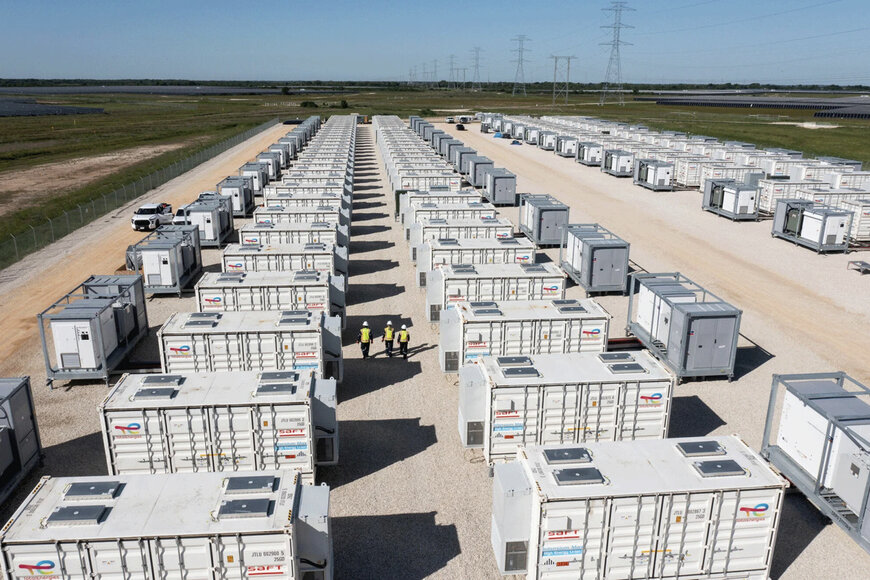
Large-scale battery storage projects to support Germany’s power system
For electricity grid operators, renewable developers, and energy infrastructure investors, battery energy storage systems (BESS) have become a key technology for stabilizing power networks with growing shares of wind and solar generation. A portfolio of 11 battery storage projects in Germany with a combined capacity of 789 MW and 1628 MWh has been launched as part of a joint investment initiative between TotalEnergies and Allianz Global Investors (AllianzGI).
The projects represent a total investment of approximately €500 million, with about 70 % financed through debt, and are scheduled to become operational by 2028.
Battery storage to manage renewable intermittency and grid congestion
Battery storage systems are increasingly used to address operational challenges in electricity systems with high renewable penetration. Their primary role is to store excess electricity generated during periods of high wind or solar output and release it during peak demand or supply shortages.
In Germany, where renewable capacity is expanding rapidly, this type of infrastructure helps:
- Reduce grid congestion caused by fluctuating renewable generation
- Provide short-term balancing services to maintain frequency stability
- Enable energy arbitrage, shifting electricity supply from low-price periods to peak demand
The 11 projects, located across Germany, are being developed by Kyon Energy, a subsidiary of TotalEnergies specializing in battery storage development. After commissioning, TotalEnergies will remain the operator of the storage assets, ensuring system integration and market participation.
Next-generation battery technology for utility-scale storage
Most of the installations will use next-generation lithium-ion battery systems supplied by Saft, another TotalEnergies subsidiary specializing in industrial and grid-scale batteries.
Utility-scale battery systems in the hundreds of megawatts range are increasingly deployed across Europe as part of national decarbonization strategies. Systems of this scale typically support frequency regulation, grid stabilization, and renewable integration, while reducing the need for fossil-fuel peaking power plants.
Germany as a strategic market for integrated electricity operations
Germany represents Europe’s largest electricity market, making it a strategic location for large-scale energy infrastructure investments. The country’s energy transition strategy involves expanding renewable generation while strengthening flexibility solutions such as battery storage.
Through this portfolio, TotalEnergies continues to expand across the entire electricity value chain, including:
Next-generation battery technology for utility-scale storage
Most of the installations will use next-generation lithium-ion battery systems supplied by Saft, another TotalEnergies subsidiary specializing in industrial and grid-scale batteries.
Utility-scale battery systems in the hundreds of megawatts range are increasingly deployed across Europe as part of national decarbonization strategies. Systems of this scale typically support frequency regulation, grid stabilization, and renewable integration, while reducing the need for fossil-fuel peaking power plants.
Germany as a strategic market for integrated electricity operations
Germany represents Europe’s largest electricity market, making it a strategic location for large-scale energy infrastructure investments. The country’s energy transition strategy involves expanding renewable generation while strengthening flexibility solutions such as battery storage.
Through this portfolio, TotalEnergies continues to expand across the entire electricity value chain, including:
- Renewable generation (wind and solar)
- Flexible assets such as battery storage
- Electricity trading and aggregation services
These activities support the supply of low-carbon electricity available around the clock, combining renewable generation with flexible storage and market optimization.
According to Stéphane Michel, President Gas, Renewables & Power at TotalEnergies, the partnership allows the company to optimize capital allocation while accelerating the development of integrated electricity infrastructure in Germany.
For Allianz Global Investors, the transaction represents its first direct equity investment in a portfolio of battery storage projects, complementing its existing energy transition portfolio, which already includes wind farms, solar projects, green hydrogen platforms, and electricity interconnection infrastructure.
Expanding the role of battery storage in Europe’s energy transition
Large-scale battery projects like this are becoming a central component of Europe’s electricity infrastructure. Similar grid-scale BESS installations have been deployed in the UK, France, and the Nordic region to support renewable integration, system balancing, and peak load management.
Once operational by 2028, the 789 MW battery storage portfolio is expected to contribute to improved power system resilience and renewable energy integration across the German grid.
The completion of the transaction remains subject to customary approvals and conditions.
www.totalenergies.com
According to Stéphane Michel, President Gas, Renewables & Power at TotalEnergies, the partnership allows the company to optimize capital allocation while accelerating the development of integrated electricity infrastructure in Germany.
For Allianz Global Investors, the transaction represents its first direct equity investment in a portfolio of battery storage projects, complementing its existing energy transition portfolio, which already includes wind farms, solar projects, green hydrogen platforms, and electricity interconnection infrastructure.
Expanding the role of battery storage in Europe’s energy transition
Large-scale battery projects like this are becoming a central component of Europe’s electricity infrastructure. Similar grid-scale BESS installations have been deployed in the UK, France, and the Nordic region to support renewable integration, system balancing, and peak load management.
Once operational by 2028, the 789 MW battery storage portfolio is expected to contribute to improved power system resilience and renewable energy integration across the German grid.
The completion of the transaction remains subject to customary approvals and conditions.
www.totalenergies.com
