
www.technology4environment.com
17
'26
Written on Modified on
Electrified Desorption Reduces Carbon Capture Energy Demand
OMV develops CoolSwingCC, a low-temperature, fully electrified desorption technology to improve efficiency in CCUS and sustainable fuel production.
www.omv.com
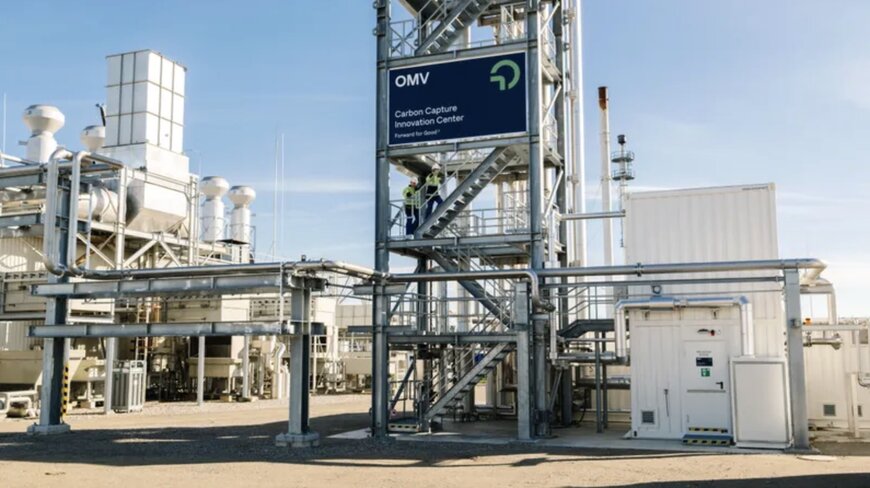
OMV has developed CoolSwingCC®, a proprietary electrified desorption technology designed to reduce the energy intensity of solvent-based carbon capture. By lowering the temperature required for CO₂ release from conventional levels above 100 °C to around 60 °C, the system targets more than 50 % energy savings in the desorption step compared with monoethanolamine-based thermal systems. The technology is being validated at OMV’s Carbon Capture Innovation Center (CCIC) to support scalable carbon capture, utilization, and storage (CCUS) and circular fuel production.
Rethinking the Energy Bottleneck in Carbon Capture
Solvent-based carbon capture is a mature technology used globally for decades. In standard systems, CO₂-containing flue gas is absorbed into a liquid solvent. The critical energy bottleneck occurs during desorption, where the solvent must be heated to high temperatures to release concentrated CO₂ for reuse.
This thermal regeneration step requires significant heat input and subsequent cooling, making it the most energy-intensive stage of the process. Conventional monoethanolamine (MEA) systems typically require temperatures exceeding 100 °C for effective solvent regeneration.
OMV focused on improving this established step rather than redesigning the entire capture system. The objective was to reduce thermal demand and integrate carbon capture more effectively into electrified industrial environments.
CoolSwingCC®: Low-Temperature, Fully Electrified Desorption
CoolSwingCC® replaces conventional high-temperature thermal regeneration with a fully electrified desorption approach operating at approximately 60 °C. According to OMV, this results in more than 50 % energy savings in the desorption phase compared with conventional MEA-based thermal systems. In addition, cooling demand following desorption is reduced due to the lower operating temperature.
By electrifying the regeneration step, the technology aligns with decarbonized power systems and supports integration into industrial facilities transitioning toward electrification. The approach maintains compatibility with existing solvent-based absorption systems, enabling retrofitting rather than full system replacement.
This compatibility is particularly relevant for operating CCUS installations seeking efficiency improvements without major capital redesign.
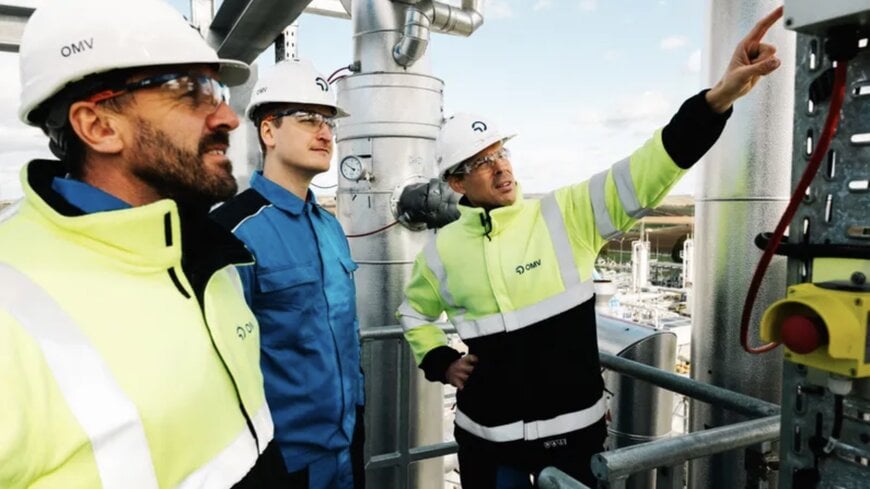
Carbon Capture Innovation Center: Mobile Pilot Validation
To validate the technology under industrial conditions, OMV established the Carbon Capture Innovation Center (CCIC). The containerized pilot unit can capture up to 1,000 tons of CO₂ per year and is designed for mobility.
Unlike fixed large-scale installations or laboratory-scale units, the CCIC can be transported and deployed at various industrial sites. This modular design enables testing under real flue gas conditions, allowing evaluation of operational performance across different sectors before full-scale deployment.
The pilot facility serves as a risk-reduction tool, enabling performance optimization and accelerated learning prior to commercial scaling.
Applications in CCUS and Sustainable Fuels
Improved desorption efficiency directly influences the economics of CCUS projects by lowering energy consumption and operational expenditure. Since CoolSwingCC® adapts existing solvent systems rather than replacing them, operational plants may be retrofitted to benefit from reduced energy demand.
For OMV’s sustainable fuel and e-fuel development strategies, concentrated CO₂ is a key feedstock. Lower-energy regeneration reduces both emissions and production costs in circular fuel value chains, supporting the viability of synthetic fuels.
Modular Scaling Strategy
Future scaling is expected to follow a “numbering-up” strategy, deploying multiple modular units rather than increasing the size of individual installations. This approach can reduce installation complexity, shorten deployment time, and lower investment risk.
Modular scaling also allows phased expansion aligned with industrial decarbonization roadmaps, supporting adaptable and site-specific carbon capture deployment.
Advancing Carbon Capture Efficiency
By addressing the most energy-intensive stage of solvent-based carbon capture, CoolSwingCC® aims to improve process efficiency without abandoning proven absorption technology. The combination of low-temperature electrified desorption and modular pilot validation positions the technology as a pathway to more energy-efficient CCUS and economically viable circular fuel production.
www.omv.com
