
www.technology4environment.com
11
'25
Written on Modified on
Alstom Achieves Top Sustainability Environmental Distinctions
Earned a 2024 CDP 'A' for climate risk, plus Corporate Knights' 2025 #7 global and #4 Europe sustainable company rankings.
www.alstom.com

Alstom's CSR priorities are integral to the company's strategy, a plan that reflects our overall Green ambition: to lead the charge to more sustainable transport systems worldwide while acting as a responsible and ethical corporate citizen.
As testimony of our vision turned into action, Alstom has been given two outstanding distinctions. First, we have earned the CDP’s maximum grade of A for Climate for 2024. Not to be outdone, we’ve climbed in Corporate Knights’ annual ranking of the 100 most sustainable companies in the world to #7 as well as #4 in the inaugural Europe 50 list. These underscore the company’s ambitious sustainability roadmap and bold climate objectives.
Alstom's CSR priorities have three main climate-focused destinations:
- Move towards net zero mobility
- Enable resource preservation
- Drive a responsible supply chain
The company has committed to reducing 40% of its 2021/22 operational CO2 emissions by 2030. Additionally, by 2030/31, we are working to reduce the intensity of greenhouse gas emissions by 42% per passenger-kilometre and by 35% per ton-kilometre.
How are we doing this?
To reduce our operational CO2 emissions specifically, we’re installing equipment photovoltaic panels on roofs or available land of our manufacturing facilities to generate renewable energy. We’ve also entered power purchase agreements, focused on solar development providing the largest part of renewable energy we use. Altogether, we are aiming at 100% electricity from renewable sources. We’re recycling waste from operations at all sites by installing collectors in our facilities’ workshops, separating materials such as cardboard, wood boxes and aluminum scraps. And we’re spearheading circular economy initiatives with our suppliers and customers, for example by changing only required components through predictive maintenance or parts reuse.
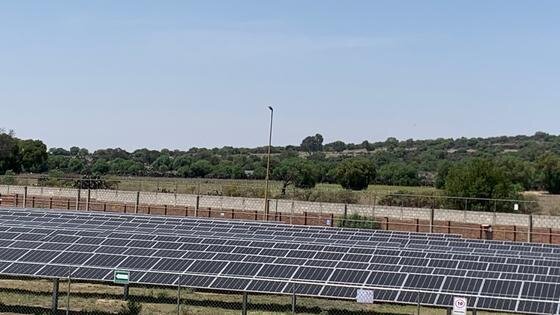
We galvanize all metiers worldwide network of CSR and Sustainability champions, EHS, Eco-design, Sustainable Procurement who roll out actions plans, develop best practices and contribute to the reporting of results and achievements. For example, recently in Mexico, our Sahagún plant has boosted the installation of photovoltaic panels. In addition, Alstom Spain obtained AFNOR ISO 26000 certification for fully integrating the principles of sustainability and good governance in its model.
We have built eco-design and circularity into our DNA for a number of years. We are:
How are we doing this?
To reduce our operational CO2 emissions specifically, we’re installing equipment photovoltaic panels on roofs or available land of our manufacturing facilities to generate renewable energy. We’ve also entered power purchase agreements, focused on solar development providing the largest part of renewable energy we use. Altogether, we are aiming at 100% electricity from renewable sources. We’re recycling waste from operations at all sites by installing collectors in our facilities’ workshops, separating materials such as cardboard, wood boxes and aluminum scraps. And we’re spearheading circular economy initiatives with our suppliers and customers, for example by changing only required components through predictive maintenance or parts reuse.
We galvanize all metiers worldwide network of CSR and Sustainability champions, EHS, Eco-design, Sustainable Procurement who roll out actions plans, develop best practices and contribute to the reporting of results and achievements. For example, recently in Mexico, our Sahagún plant has boosted the installation of photovoltaic panels. In addition, Alstom Spain obtained AFNOR ISO 26000 certification for fully integrating the principles of sustainability and good governance in its model.
We have built eco-design and circularity into our DNA for a number of years. We are:
- Innovating solutions to reduce material intensity through condition-based maintenance, avoiding the changing of parts that are still in good and safe condition.
- Reusing parts and components to give them a second life by making them available through our StationOne online market place.
Ratings agencies are noticing
Alstom's performance is regularly evaluated by prominent non-financial ESG organizations, ensuring transparent and consistent reporting to stakeholders. This also enables us to benchmark ourselves against industry peers and influential sustainability leaders.
Since March 2025, we’ve received:
Alstom's performance is regularly evaluated by prominent non-financial ESG organizations, ensuring transparent and consistent reporting to stakeholders. This also enables us to benchmark ourselves against industry peers and influential sustainability leaders.
Since March 2025, we’ve received:
- CDP maximum A score for Climate for 2024: A testament to our relentless pursuit of environmental excellence, we’ve built on our A- score in 2023. Every year, Alstom undergoes a rigorous evaluation process, submitting comprehensive responses to a detailed questionnaire covering five pillars: Climate, Water, Forest, Pollution, Biodiversity.
- Ranking of 7 in Corporate Knights’ 100 Most Sustainable Companies of 2025: Alstom’s Top Ten finish is strong progress from last year’s position of 19.
- Ranking 4 of 50 in Corporate Knight's inaugural Europe 50 list.

Alstom also relies on data to deploy its circular economy roadmap - but data is only meaningful if it’s shared at the right level throughout the value chain. The company is an active member of organisations that will use data for the traceability of materials and components. Alstom adheres to GS1 standards along with other rail industry players. The GS1 initiative intends to systematise the use of harmonised labels with a unique identification number for each traceable part. This standard provides digital continuity throughout the life cycle of a part, product or fleet.
By sharing and analysing this data, it’s possible to optimize predictive maintenance, modernization and repairs. This ensures savings in time and resources, reliability and optimum service life, all while limiting environmental impact by reducing maintenance to the strictly necessary.
www.alstom.com
