
www.technology4environment.com
23
'26
Written on Modified on
Battery Energy Storage System Coupling for Solar Hybridisation
Ingeteam and National Electricity Market operators deploy battery energy storage system hybridisation topologies to resolve utility scale PV curtailment across transmission networks.
www.ingeteam.com
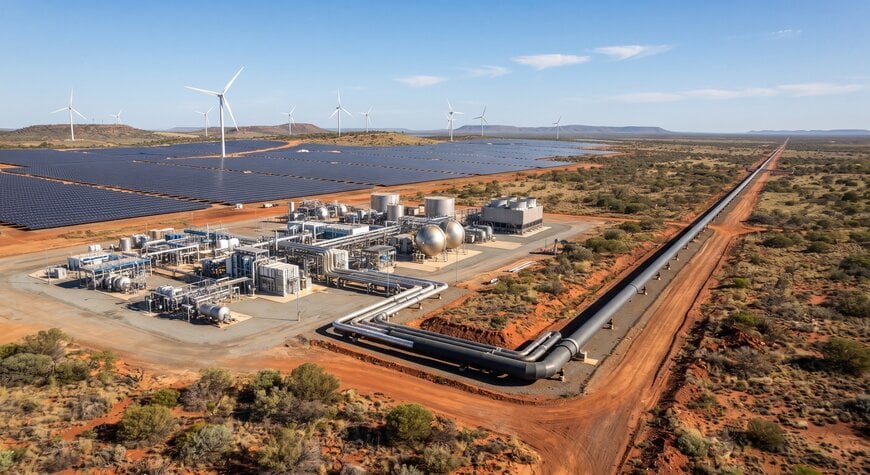
Wholesale electricity markets with high penetration of utility-scale solar generation experience midday negative pricing alongside morning and evening demand peaks. Ingeteam collaborates with renewable asset developers and transmission operators across the Australian National Electricity Market to deploy hybrid power conversion architectures that eliminate curtailment losses and provide active frequency control ancillary services.
Operating Logic of Hybrid Topologies
Renewable energy developers address generation curtailment by co-locating battery energy storage systems with existing photovoltaic arrays. Ingeteam provides engineering integration for alternating current and direct current coupling topologies using proprietary power plant controller hardware.
In alternating current coupled systems, photovoltaic arrays and battery storage operate through independent conversion paths. The storage units connect at the medium-voltage level, utilizing Ingeteam C Series and M Series inverters alongside dedicated transformers and switchgear. This architecture enables single-stage power conversion when importing or exporting active power with the transmission network, simplifying retrofits on existing solar farms under established dispatchable unit identifier registrations.
Direct Current Coupling Integration
For direct current coupled configurations, Ingeteam integrates photovoltaic arrays and battery storage directly onto a shared direct current bus. Power dispatch occurs through a centralized inverter coupled with an Ingeteam bidirectional buck-boost direct current to direct current converter. This configuration captures generation that would otherwise exceed inverter thresholds, commonly known as clipping losses, through a single conversion stage.
Plant footprint matches standard solar installations by distributing battery units directly adjacent to array power stations. Auxiliary power distribution challenges in distributed battery configurations are resolved through factory-mounted 200 kVA auxiliary transformers integrated into the power station Skid. This design avoids external balance-of-plant cabling while supplying localized heating, cooling, and safety systems.
Control Architecture and System Stability
Both coupling architectures operate under the control of the INGECON SUN Plant Controller. The unit issues synchronized dispatch instructions across all distributed inverter stations via high-speed internal communication protocols.
Grid-forming control capabilities are natively embedded within the inverter firmware without requiring hardware expansion or oversized power ratings. The direct current coupled architecture maintains grid-forming operation and participates in contingency frequency control ancillary services markets under Australian National Electricity Market connection standards. Because direct current additions do not alter active power export models when configured not to import from the grid, asset operators can expand export duration without full revision of existing generator performance standards.
Edited by Evgeny Churilov, Induportals Media - Adapted by AI.
www.ingeteam.com
