
www.technology4environment.com
23
'26
Written on Modified on
Modular Powertrain Architecture for Wind Turbines
ZF Wind Power introduces the SHIFT modular powertrain platform, integrating the gearbox, main bearing, and generator to scale wind turbine architectures.
www.zf.com
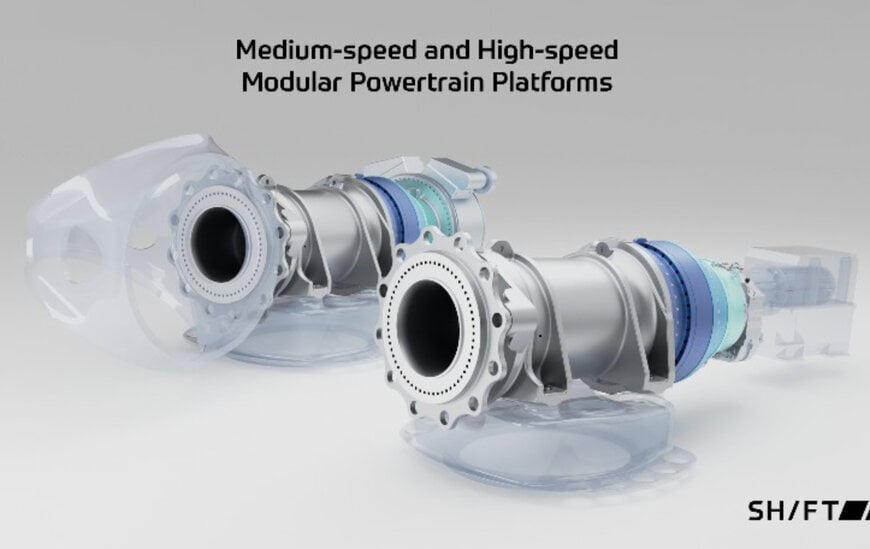
ZF Wind Power has launched the SHIFT modular powertrain solution for the onshore and offshore wind energy sectors. This architecture integrates the gearbox, main bearing unit, and generator into a single engineered system to accommodate varying turbine designs, load conditions, and operational environments.
Challenges in Wind Turbine Drivetrain Engineering
As wind energy applications scale toward larger capacities, turbine manufacturers require drivetrains capable of handling increasing torque requirements without demanding entirely bespoke mechanical redesigns for every project iteration. Conventional powertrain development often relies on fragmented component sourcing, which complicates system integration, increases development time, and elevates the risk of mechanical failure under extreme load conditions. To meet stringent noise, vibration, and harshness (NVH) requirements while maintaining competitive production timelines, the industry requires standardized mechanical platforms that can adapt to different speed and torque specifications without compromising structural integrity.
Modular Architecture and Generator Integration
To address these structural demands, the SHIFT platform utilizes a highly flexible, standardized modular architecture built upon ZF's established gearbox designs. The SHIFT gearbox acts as the central backbone of the powertrain. By engineering both the main bearing unit and the gearbox modules in-house, the system enables the seamless integration of the generator into the overall drivetrain architecture from the earliest design stages. Bert Verdyck, CTO of ZF Wind Power, explains the technical application: "Medium-speed as well as high-speed powertrain layouts can be created by combining these standardized in-house modules, offering high flexibility to adapt to varying turbine designs, load conditions and operating environments."
System-Level Load Management and Deployment
By optimizing the mechanical and electrical interaction between the gearbox, main bearing unit, and generator as a single engineered entity, the powertrain maximizes mechanical efficiency, load management, and lifetime performance. Dr. Jochen Witzig, CEO of ZF Wind Power, details the integration strategy: "By engineering both the main bearing unit and gearbox in-house, ZF maintains control over performance, quality, and innovation, while enabling a highly flexible architecture adaptable to a wide range of turbine designs." The development relies on a collaborative engineering framework, spanning from initial co-design configurations to continuous operational monitoring, ensuring that the powertrain components meet strict torque parameters throughout their lifecycle. Supported by an installed base of over 65 GW worldwide, the platform reduces integration complexity and accelerates the deployment of next-generation large-scale turbine applications.
Additional Context
This section details technical specifications and competitive benchmarking not included in the original product announcement
Within the global wind turbine drivetrain market, the ZF Wind Power SHIFT platform competes with modular geared solutions such as the Flender Winergy powertrain and the Moventas Exceed series. The industry is currently divided between direct-drive architectures, which eliminate the gearbox entirely to reduce mechanical wear, and medium-to-high-speed geared architectures, which offer a significantly more compact and lightweight generator footprint. By utilizing standardized modules to construct both medium-speed and high-speed configurations, the ZF SHIFT architecture targets manufacturers seeking to minimize the overall nacelle mass on multi-megawatt offshore platforms, providing a highly scalable alternative to the heavy magnetic ring structures required in direct-drive topologies.
Edited by Maria Brueva, Induportals editor – adapted by AI.
www.zf.com
