
www.technology4environment.com
03
'26
Written on Modified on
Continental Invests in the Energy Transition: Construction of First Own Wind Farm for Korbach Tire Plant
By constructing three wind turbines in Twistetal, Continental is securing the energy supply for its Korbach site, aiming to cover approximately two-thirds of its electricity needs through its own green generation.
www.continental.com
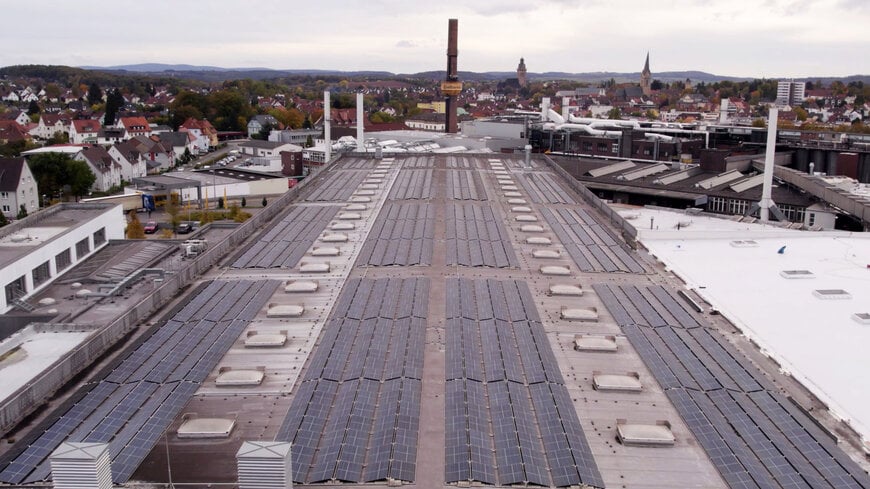
Continental has decided to build its first company-owned wind farm in Twistetal, near Korbach. This strategic infrastructure project is designed to provide sustainable power to the tire plant located about eight kilometers away in Korbach, Hesse. With an investment in the mid-double-digit million-euro range, the tire manufacturer underscores its commitment to a decentralized and competitive energy supply. Construction is scheduled to begin in 2026, with commissioning planned for approximately 18 months later.
A Milestone for Sustainable Tire Production
Together with the existing photovoltaic systems on site, the three planned wind energy plants will cover about two-thirds of the plant's total electricity demand. The Nordex N175/6.X type turbines—with a total height of 267 meters—are among the most powerful onshore models available and are capable of generating around 55 gigawatt-hours of electricity annually. This corresponds to the average annual consumption of roughly 15,000 households.
"With our own wind turbines near the plant, we gain planning certainty regarding energy costs and become less dependent on fluctuating energy markets—decisive factors for competitive tire production in Germany. This aligns with our global strategy of expanding company-owned power generation from renewable sources and will serve as a model for other locations worldwide." — Dr. Bernhard Trilken, Head of Production and Logistics, Tires Division, Continental.
Industrial Competitiveness Meets Sustainability
The electricity generated in Twistetal will be fed directly into the tire plant’s energy-intensive production processes, particularly for mixing rubber raw materials and the extrusion process. The project is integrated into the site's existing energy infrastructure to ensure a reliable supply even during fluctuations in wind and solar availability. For the Korbach site, which employs around 2,400 people and manufactures tires for passenger cars, motorcycles, bicycles, and industrial applications, this represents a core component of its future strategy.
"The wind farm will bring significant benefits to our site. It helps cover a large portion of our electricity demand in Korbach with self-generated, renewable energy—at competitive and reliably calculable costs. The project demonstrates how industrial competitiveness and sustainable energy use can be successfully combined in Germany." — Klaus Ohlwein, Head of the Continental Tire Plant in Korbach.
Pioneering Low-Emission Energy Sources
Continental is consistently advancing the decarbonization of its production. Since 2020, the company has covered its global electricity demand with renewable energy, supported by long-term renewable energy power purchase agreements and on-site generation. Over the past four years, Continental has reduced absolute CO₂ emissions in tire production by approximately 180,000 tons. A significant milestone was reached at the beginning of 2026: the company completely phased out the use of coal and heavy fuel oil at all production sites worldwide.
The Korbach project now serves as a pilot for a global Continental initiative. The company is continuously evaluating other tire plants around the world for their suitability for similar self-sufficient energy generation projects, taking into account local conditions such as regulatory frameworks, storage technologies, and economic viability.
Edited by Maria Brueva, Induportals editor – adapted by AI.
www.continental.com
