
www.technology4environment.com
02
'26
Written on Modified on
Vitol’s WPU Selects Sulzer for Netherlands Plastic Chemical Recycling Facility
New Rotterdam plant will process up to 80,000 tonnes of mixed plastic waste annually, converting it into reusable feedstock through pyrolysis technology.
www.sulzer.com
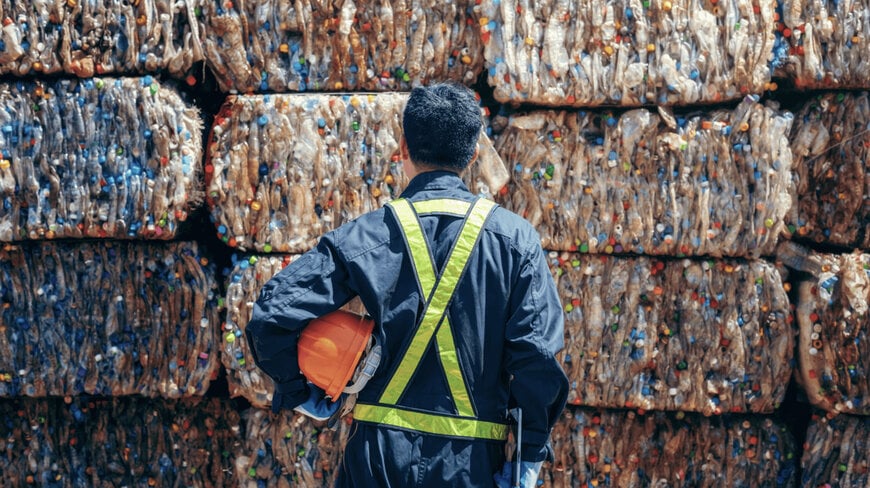
WPU, a subsidiary of Vitol, has selected Sulzer to supply engineering services and vapor condensation technology for a new chemical recycling facility in the Netherlands. The cooperation focuses on utilizing thermal conversion systems to process mixed plastic waste into reusable raw materials for the petrochemical and manufacturing industries.
Modular Architecture and Condensation Technology Implementation
The chemical recycling facility, situated adjacent to the Vitol VPR refinery in the Port of Rotterdam, is engineered to process up to 80,000 tonnes of mixed plastic waste annually. The site utilizes a proprietary pyrolysis process to thermally decompose solid polymer waste into gas. Sulzer will supply its rapid cooling and condensation technology to convert these pyrolytic vapors into a liquid feedstock. This infrastructure establishes a closed-loop chemical recycling ecosystem capable of supplying manufacturers with recycled hydrocarbon derivatives required for virgin plastic production.
The technical execution relies on a skid-mounted modular architecture, which standardizes installation and allows operators to scale the hardware to accommodate changing operating conditions or future capacity requirements. Basic engineering for the installation was completed in the first quarter of 2026. The initial delivery of modular equipment skids is scheduled for the first quarter of 2027 to align with the primary construction timeline.
Operational Parameters for Polymer Waste Streams
Processing post-consumer plastics requires managing feedstocks with varying levels of contaminants. The rapid cooling mechanism of the condensation technology is designed specifically to handle these variables by quickly quenching the gases produced during pyrolysis, which minimizes unwanted secondary chemical reactions and ensures a consistent liquid output.
Addressing the scaling requirements of the facility, Tom Baker, Vitol Head of Naphtha, noted that implementing pyrolysis at an industrial volume provides a verifiable operational model to consistently deliver recycled feedstock back into the commercial plastics sector.
Additional Context:
This section details technical specifications and competitive benchmarking not included in the original product announcement
In the chemical recycling industry, pyrolysis vapor condensation systems are evaluated against standard distillation and direct-contact quenching columns. Equipment manufacturers operating in the thermal separation and fractionation space, such as Alfa Laval and Koch-Glitsch, also provide specialized mass transfer infrastructure for pyrolytic oils. Benchmark criteria for these industrial systems include vapor residence time, fouling resistance against heavy polymer waxes, and vapor-liquid separation efficiency. Rapid condensation modules optimize liquid yields by minimizing residence time to prevent thermal degradation of the pyrolytic vapors, yielding a higher proportion of lighter, higher-value hydrocarbon fractions compared to slower, conventional cooling methods. Furthermore, deploying skid-mounted modular systems typically reduces on-site construction timelines and minimizes integration risks compared to traditional stick-built chemical plant infrastructure.
Edited by Natania Lyngdoh, Induportals editor, assisted by AI.
www.sulzer.com
