
www.technology4environment.com
15
'26
Written on Modified on
Hitachi Energy Launches Clean Hybrid Generator For Zero Emission Power
The new HyFlex Compact combines hydrogen fuel cells and batteries, delivering a flexible and portable power hub to replace diesel generators in off-grid applications.
www.hitachi.com
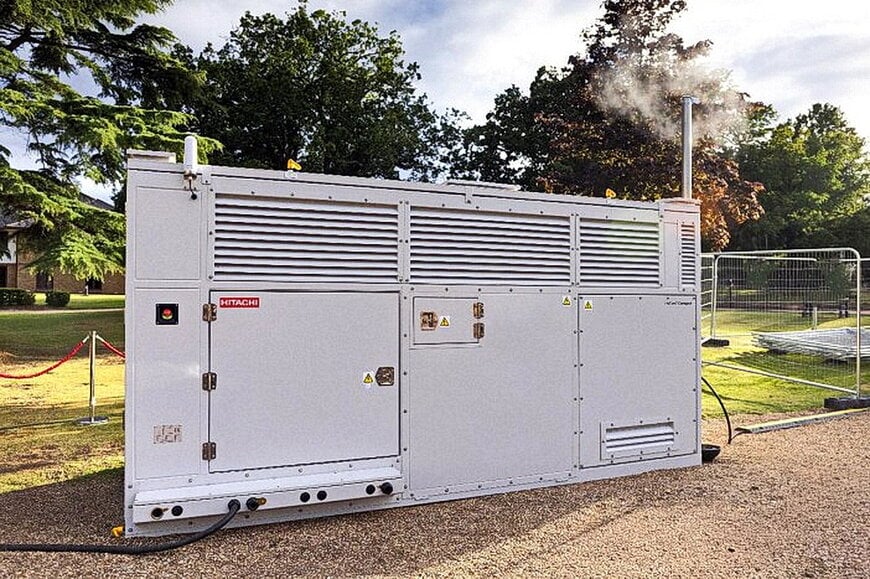
Hitachi Energy has developed a containerized hybrid generator system designed to replace diesel units in temporary and remote applications. The technology combines fuel cells, battery storage, and power electronics to provide emission-free alternating current electricity for industrial and infrastructure sites.
System Integration and Technical Configuration
Temporary construction sites, mining operations, and remote events frequently operate in environments without access to a centralized electrical grid. Traditional reliance on diesel generation introduces carbon emissions, localized air pollution, and noise. To address this, the hybrid power hub integrates hydrogen fuel cells with high-performance batteries within a single portable enclosure. The system operates as an independent or grid-connected mobile microgrid, managed by an optimized control system that balances power delivery between the fuel cells and the battery energy storage component.
The inclusion of optional alternating current (AC) and direct current (DC) input modules allows the system to interface with multiple external energy assets. This multi-source integration capability enables the system to accept supplemental renewable generation, such as localized solar photovoltaic arrays, which reduces total hydrogen consumption when external power is available. The primary chemical process utilizes hydrogen and atmospheric oxygen within the fuel cell stack to generate electricity, with the only direct byproducts being heat and water vapor.
Operational Framework and Infrastructure Support
The system architecture relies on advanced power electronics to ensure voltage and frequency stability under fluctuating load conditions. This stabilization is critical for sensitive industrial equipment and electric vehicle charging infrastructure deployed in remote locations. The control system manages the state of charge of the internal battery bank, using it to absorb peak loads and support transient demands that exceed the optimal operating ramp rate of the hydrogen fuel cells.
By functioning as a configurable power hub, the unit addresses power quality challenges in hard-to-abate sectors. Initial operational data gathered from early pilot deployments validated the integration of the control software with the fuel cell dynamics and power conversion stages under real-world conditions. Continued development of these power electronic platforms is supported by dedicated testing infrastructure, including the Grid & Power Quality Solutions and Service Test Center in Västerås, Sweden.
Additional Context: Technical Specifications and Competitive Benchmarking
The hybrid generator market features several containerized and trailer-mounted hydrogen fuel cell systems designed to replace standard 100 kVA to 500 kVA diesel generators. In this technology sector, performance is evaluated based on direct emissions, system efficiency, transient response times, and localized noise levels.
When comparing environmental and performance metrics, modular fuel cell microgrids produce zero direct emissions, releasing only water and heat, whereas conventional diesel generators emit carbon dioxide, nitrogen oxides, and particulate matter. From an efficiency standpoint, the electrical efficiency of standalone fuel cells ranges between 40 percent and 50 percent, surpassing conventional diesel engines which typically achieve 33 percent to 35 percent efficiency under optimal mechanical load.
Operational dynamics also differ significantly between the two systems. Fuel cell systems equipped with integrated battery buffers achieve sub-millisecond transient response times because the electrical storage handles sudden load changes, while diesel generators rely on mechanically governed engine ramp delays. Additionally, operational noise levels remain low for fuel cell systems, where noise is limited to cooling fans and pumps, contrasting with the high internal combustion noise characteristic of diesel power generation.
Comparable systems in the industry, such as those developed by EODev (GEH2) or AFC Energy, utilize proton-exchange membrane fuel cells paired with lithium-ion battery packs. The primary differentiator for integrated microgrid hubs lies in the complexity of the power electronics, specifically the ability to accept simultaneous AC and DC inputs from external renewable sources without requiring separate external inverters. While standard fuel cell generators operate strictly as standalone power sources, multi-asset integration architectures allow the unit to function simultaneously as a power factor corrector, a frequency stabilizer, and an energy storage system.
Edited by Evgeny Churilov, Induportals Media - Adapted by AI.
www.hitachienergy.com
