
www.technology4environment.com
12
'26
Written on Modified on
Multimodal Recycling Architecture For Composite Waste
AIMPLAS is leading a technical consortium to engineer multimodal recovery strategies for single-use composite polymers, diverting industrial manufacturing waste toward high-value applications.
www.aimplas.net
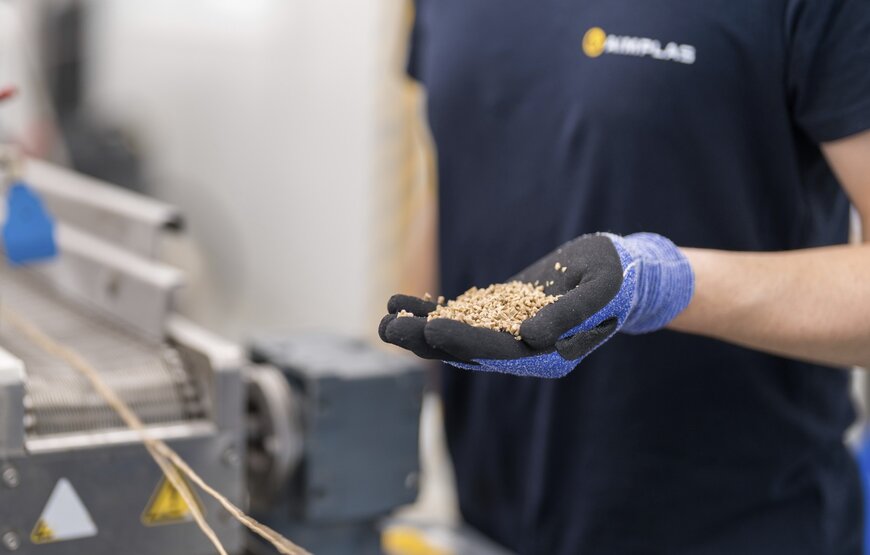
AIMPLAS is directing a collaborative research initiative to develop physical, mechanical, and chemical recycling technologies for single-use auxiliary waste generated during composite material production. The multimodal material recovery system targets the creation of recycled raw materials for subsequent deployment in the automotive, technical textile, and urban furniture sectors.
Optimizing The Sustainable Material Supply Chain
The aerospace, railway, marine, and renewable energy sectors rely heavily on composite materials to achieve lightweight structural integrity. The manufacturing of these composites requires single-use auxiliary materials, including vacuum bags, release films, and absorbent fabrics. Due to the high degree of cross-contamination with thermoset resins following the curing process, these plastics typically undergo incineration or landfill disposal.
To address this gap in the industrial circular economy, a consortium of organizations is developing the IMPLICIT project, a multimodal recycling architecture designed to extract and purify thermoplastic polymers. The target materials primarily include polyamide, polyethylene terephthalate, polyethylene, and polypropylene.
Multimodal Recycling Technologies And Decontamination
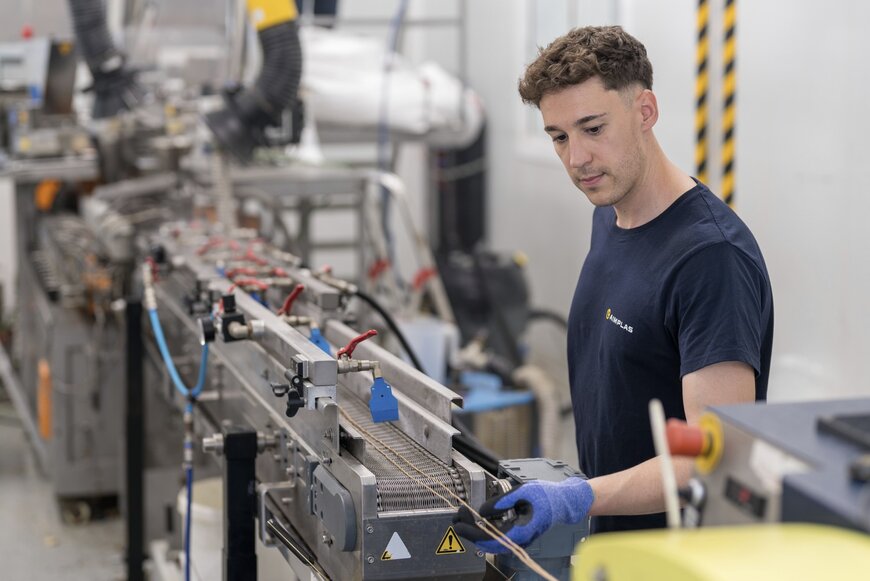
The technical framework relies on three distinct material recovery pathways to achieve high-purity extraction. The mechanical recycling phase incorporates localized shredding, phase separation, and extrusion to process baseline materials. For complex waste mixtures, the system utilizes physical recycling based on selective dissolution to isolate target polymers from the waste matrix.
Furthermore, chemical recycling technologies, specifically solvolysis, are deployed to break down residual thermoset resins, enabling the recovery of high-value monomers and oligomers. The approach integrates advanced decontamination and compounding processes, utilizing specific additive formulations to restore the mechanical properties of the degraded polymers to levels required for industrial viability.
Industrial Consortium And Application Validation
The initiative is coordinated by Solteco, with technical leadership provided by AIMPLAS alongside technology centers Eurecat, Tecnalia, and Leartiker. Industrial integration is managed by Birziplastik, Faperin, and Industrias Alegre. The Spanish Composite Materials Association (AEMAC) supports the framework, while Airbus acts as a strategic partner by supplying verified auxiliary waste from active aerospace manufacturing processes.
To validate the recycled thermoplastics, the consortium subjects the recovered materials to life cycle assessment and life cycle costing analyses. The validated outputs are subsequently engineered into structural components for technical automotive parts, multifilaments for industrial textiles, and polymer profiles for urban furniture infrastructure. The project is funded by the Spanish Ministry of Science, Innovation and Universities through the Centre for the Development of Industrial Technology and Innovation (CDTI) and the European Regional Development Fund. Pau Manclus, Chemical Recycling Researcher at AIMPLAS, noted that addressing the recycling of auxiliary materials demonstrates the technical viability of transforming complex, cross-contaminated waste into useful resources, thereby closing the life cycle of these materials within key industrial sectors.
Additional Context
This section details technical specifications and competitive benchmarking not included in the original news release.
To evaluate the position of multimodal recycling within the broader polymer recovery market, it is necessary to compare the IMPLICIT methodology against established waste management benchmarks. Traditional mechanical recycling of composite manufacturing scrap typically involves granulating the waste for use as low-value filler in construction materials, which fails to recover the base polymers and degrades overall mechanical properties. Advanced thermal processes, such as pyrolysis, are frequently deployed for mixed industrial plastics but require high energy inputs and yield broad hydrocarbon fractions rather than targeted chemical building blocks.
By integrating selective dissolution and solvolysis, the proposed architecture offers a distinct technical advantage over conventional mechanical grinding. Solvolysis utilizes targeted solvents under controlled temperature and pressure to break specific chemical bonds in the contaminating thermoset resins, isolating the underlying thermoplastic polymers without severely degrading their molecular weight. This sequential approach achieves a measurable increase in monomer purity and structural integrity, establishing a benchmark for processing highly contaminated vacuum bags and release films that would otherwise face incineration.
Edited by Aishwarya Mambet, Induportals Editor, with AI assistance.
www.aimplas.com
