
www.technology4environment.com
12
'26
Written on Modified on
Integrating Cryogenic Carbon Capture Technology in Cement Production
Air Liquide has launched its first industrial-scale pilot unit at Holcim’s CaptureLab to test flue gas pre-treatment for carbon capture.
www.airliquide.com
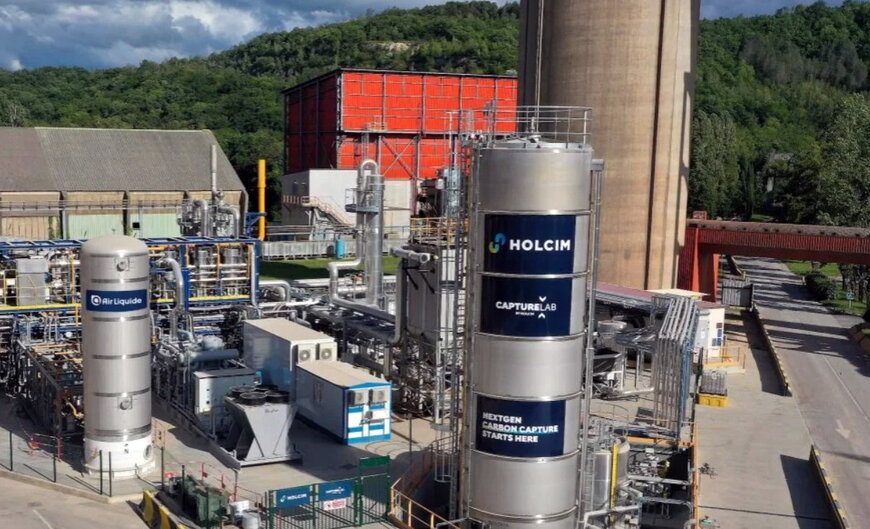
Air Liquide and Holcim have partnered to address the specific difficulties of carbon capture within the cement industry. In this sector, the majority of carbon dioxide emissions originate from the chemical breakdown of limestone rather than combustion processes, presenting a distinct industrial automation challenge. This collaboration utilizes Holcim’s dedicated CaptureLab testing facility in France alongside Air Liquide’s cryogenic proprietary technology to validate scalable carbon capture systems for hard-to-abate industrial sectors.
Technical Solution and Engineering Responsibilities
The pilot system utilizes Air Liquide's Cryocap FG (Flue Gas) system, which is engineered specifically for cement plant emissions. The industrial-scale pilot unit operates with a processing capacity of 3,000 Nm³/h of flue gas. Air Liquide is responsible for the design, technology deployment, and operation of the modular unit, drawing on its established industrial infrastructure experience.
The technical objective of the system centers on two critical sequential stages:
- Flue Gas Pre-treatment: The unit removes localized impurities inherent to cement manufacturing emissions that could otherwise degrade downstream equipment.
- Preconcentration: The system concentrates the CO₂ stream prior to final purification, optimizing the energy efficiency and reliability of the overall capture process.
Deployment and Application Scalability
The unit is currently deployed at Holcim's CaptureLab in France, which serves as a dedicated platform for testing cement industry capture technologies. To ensure compatibility with existing digital infrastructure and varied plant layouts, the pilot unit features a modular design. This architecture allows the physical system to be transported and reinstalled at alternative industrial sites following the completion of the initial testing phase.
Expected Operational Impact
The implementation of the pilot unit serves to validate the scaling up of cryogenic capture technologies from initial chemical models to full industrial applications. By successfully handling a throughput of 3,000 Nm³/h, the system establishes predictable operational parameters for future large-scale cement and lime projects. The primary expected results include improved process stability during the purification stage, measurable parameters for energy consumption, and a clear engineering framework for deploying standardized carbon capture modules across the sector.
Edited by Evgeny Churilov, Induportals Media - Adapted by AI.
www.airliquide.com
The unit is currently deployed at Holcim's CaptureLab in France, which serves as a dedicated platform for testing cement industry capture technologies. To ensure compatibility with existing digital infrastructure and varied plant layouts, the pilot unit features a modular design. This architecture allows the physical system to be transported and reinstalled at alternative industrial sites following the completion of the initial testing phase.
Expected Operational Impact
The implementation of the pilot unit serves to validate the scaling up of cryogenic capture technologies from initial chemical models to full industrial applications. By successfully handling a throughput of 3,000 Nm³/h, the system establishes predictable operational parameters for future large-scale cement and lime projects. The primary expected results include improved process stability during the purification stage, measurable parameters for energy consumption, and a clear engineering framework for deploying standardized carbon capture modules across the sector.
Edited by Evgeny Churilov, Induportals Media - Adapted by AI.
www.airliquide.com
