
www.technology4environment.com
29
'26
Written on Modified on
Reversible Fuel Cell System Expands Industrial Energy Storage
HARTING integrates Reverion fuel cell technology to support renewable energy storage, hydrogen conversion and resilient power management at its Espelkamp facility.
www.harting.com
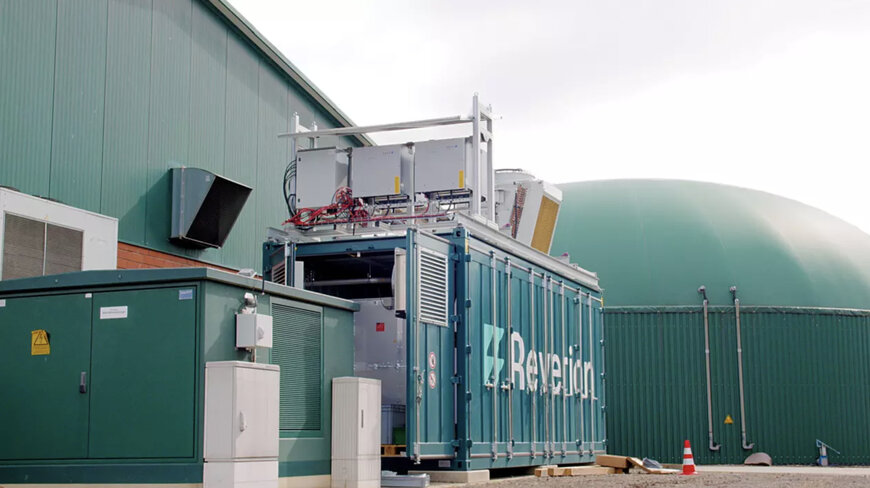
HARTING Technology Group has commissioned a reversible fuel cell plant at its Espelkamp site, expanding its on-site renewable energy infrastructure with hydrogen-based energy storage capabilities. The installation complements existing biogas and photovoltaic systems and is designed to improve energy efficiency, support load management and increase operational resilience through integrated power generation and storage.
The system, supplied by Reverion, initially converts locally produced biogas into electricity and will later enable the storage of renewable energy as green hydrogen for subsequent reconversion into electrical power. The project reflects a growing trend in industrial energy management, where manufacturers are deploying integrated energy systems to balance renewable generation, storage and consumption within a single facility.
Reversible Fuel Cell Technology Combines Power Generation and Hydrogen Storage
Unlike conventional hydrogen storage systems that typically use separate electrolyzers, storage units and fuel cells, the Reverion installation integrates these functions within a single system. The technology operates reversibly, allowing it to switch between electrolysis mode, where electricity is converted into hydrogen, and fuel cell mode, where stored hydrogen is converted back into electricity.
According to HARTING, the system is designed to achieve a round-trip efficiency of up to 75%, meaning up to 75% of the original electrical energy can be recovered after conversion to hydrogen and back to electricity. Reverion reports that this level of efficiency is enabled by reversible high-temperature fuel cell technology and the integration of energy conversion stages into a single platform.
The system also captures thermal energy generated during operation. Heat that is not converted into electricity can be reused within the biogas process, helping maintain fermentation conditions and improving overall energy utilization.
Integration Supports Industrial Energy Management
HARTING has integrated the plant into its existing energy infrastructure through defined interfaces connecting the system to energy and load management processes. This allows operators to monitor power consumption, generation and energy storage flows across the facility.
The current installation supports electricity supply for production and administrative operations in several buildings at the Espelkamp site. While the plant currently contributes approximately 3% of the site's energy demand, the company is evaluating different operating configurations to determine future storage capacity and expansion potential.
Technically, the system supports electrical input of up to 250 kW in electrolysis mode and power output of up to 100 kW when operating as a fuel cell. These capabilities enable testing of different energy storage and load-balancing scenarios before larger-scale deployment.
Hydrogen Storage Addresses Renewable Energy Variability
One of the principal challenges associated with renewable energy sources such as solar and wind power is the mismatch between generation and demand. Hydrogen-based energy storage systems are increasingly being explored as a method of storing surplus renewable electricity over extended periods and releasing it when needed.
Round-trip efficiency remains a key performance indicator for such systems. Many hydrogen storage architectures recover significantly less than the original electrical input after conversion cycles. Reversible fuel cell technologies are attracting attention because they can reduce conversion losses by combining electrolysis and power generation functions within a single platform.
For industrial facilities, this approach offers potential benefits in peak-load management, backup power provision and renewable energy utilization without relying exclusively on grid electricity.
Industrial Connectivity Supports System Integration
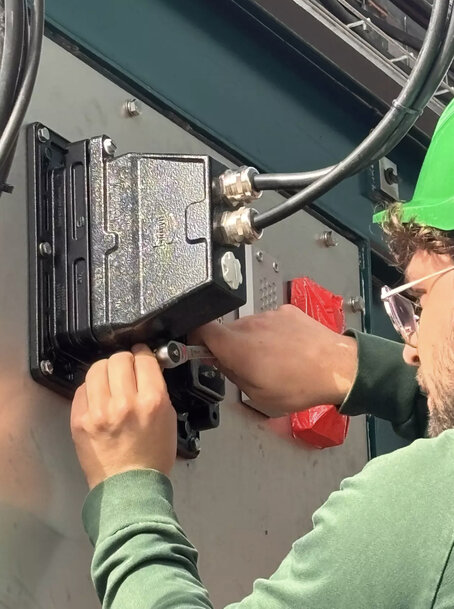
The fuel cell installation incorporates industrial connectivity components from HARTING's Han portfolio, including connector housings and modular inserts used for signal, data and power transmission within the plant.
The modular connector architecture allows multiple transmission media to be integrated through a single interface, supporting communication and power distribution between subsystems. Such connectivity infrastructure is critical in industrial energy environments where multiple generation, storage and control systems must operate as a coordinated network.
Edited by Natania Lyngdoh, Induportals editor, assisted by AI.
www.harting.com
