
www.technology4environment.com
28
'26
Written on Modified on
Hydropower capacity expansion for grid stabilization in Brazil
Companhia Paranaense de Energia is expanding its generation infrastructure to increase total installed capacity to 8.3 gigawatts.
www.andritz.com
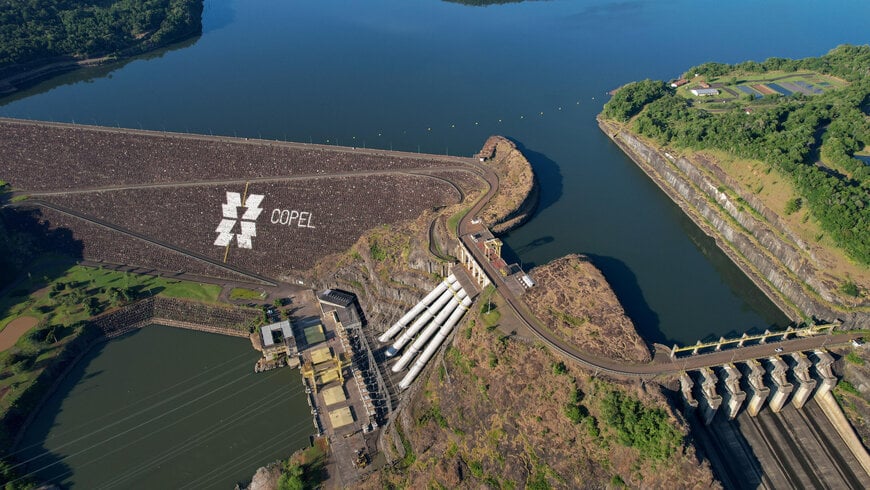
Companhia Paranaense de Energia (COPEL) and ANDRITZ have partnered to deploy additional generating units at the Foz do Areia and Segredo hydropower plants on the Iguaçu River in Paraná, Brazil. This industrial automation and expansion project aims to integrate massive renewable energy sources into the Brazilian national grid by providing critical balancing power. The expansion directly addresses the operational challenges of maintaining grid stability and resilience amid an increasing share of intermittent power sources.
Operational challenge and partnership roles
Modern electrical grids require responsive capacity reserves to manage peak loads and stabilize frequency fluctuations. COPEL requires a massive infrastructure upgrade to fulfill obligations under Brazil's Second Capacity Reserve Auction (LRCAP), a federal regulatory framework securing national power reliability.
Because of the scale and mechanical complexity of high-output hydroelectric machinery, COPEL partnered with ANDRITZ, leveraging their specialized engineering capabilities in heavy rotating equipment and plant automation systems. As the asset owner, COPEL manages the regulatory alignment, site infrastructure, and integration into the national transmission system. ANDRITZ acts as the technology supplier responsible for the turnkey execution of the project.
Technical solution and system architecture
The technical solution adds more than 2.1 gigawatts of new capacity to the existing 2.9 gigawatts combined output of the two facilities. ANDRITZ is responsible for the design, engineering, manufacturing, installation, and commissioning of the new generating units.
The scope of delivery includes high-efficiency hydraulic turbines and synchronous generators, alongside digital governance systems, excitation units, and secondary plant protection systems. The new equipment complies with international IEC and ISO standards for hydro-machinery, ensuring long-term mechanical reliability and high hydrodynamic efficiency. The system architecture utilizes digital control interfaces to allow automated ramp-up sequences, enabling the plants to respond rapidly to dispatch commands from the national grid operator.
Implementation and deployment timeline
Deployment activities are structured to begin on-site in 2026. The implementation phase integrates the new mechanical and electrical components into the existing civil engineering structures of the Foz do Areia and Segredo dams.
ANDRITZ will oversee the structural engineering interfaces required to link the new penstocks, turbines, and generators with the existing water intake systems and electrical substations. The expansion project is scheduled to reach full operational status and begin commercial energy generation in 2030.
Expected grid impact
Upon completion, the deployment increases COPEL's total installed capacity from 6.2 gigawatts to 8.3 gigawatts, representing a 34% operational capacity increase. This additional baseline and peaking capacity improves process stability for the regional energy infrastructure. The deployment provides the fast-acting spinning reserves necessary to prevent voltage drops and maintain transmission safety across the regional digital infrastructure.
Edited by Evgeny Churilov, Induportals Media - Adapted by AI.
www.andritz.com
