
www.technology4environment.com
24
'26
Written on Modified on
BASF Introduces Renewable-Electricity-Based AdBlue
BASF launches AdBlue GE produced using 100% renewable electricity under a mass balance approach, reducing manufacturing-related CO₂ emissions compared to conventional production.
www.basf.com
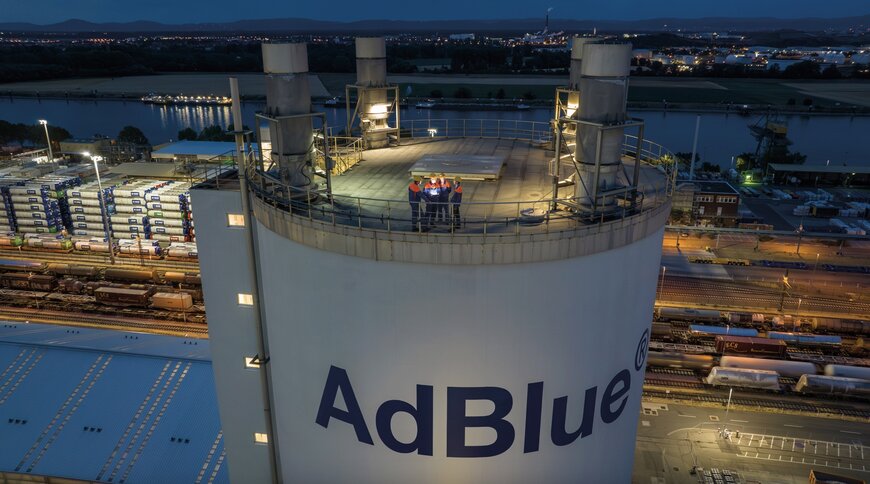
BASF has introduced AdBlue GE (Green Electricity), a urea-based diesel exhaust fluid manufactured using electricity sourced entirely from renewable energy. The product is designed to lower the CO₂ footprint of the manufacturing process compared to conventionally produced AdBlue, while maintaining identical technical specifications and performance.
Renewable Electricity via Mass Balance Approach
For AdBlue GE production, BASF replaces 100% of the electricity required along the value chain with renewable electricity attributed from the Hollandse Kust Zuid offshore wind farm. The allocation is implemented using a mass balance approach, in which renewable electricity is mathematically assigned to specific production volumes while remaining integrated within the overall energy system.
This approach enables a reduction in manufacturing-related CO₂ emissions without modifying the chemical composition or physical properties of the final product.
Equivalent Technical Performance
AdBlue GE by BASF is fully equivalent to conventional AdBlue in terms of purity and functional characteristics. As a diesel exhaust fluid used in selective catalytic reduction (SCR) systems, AdBlue enables the conversion of nitrogen oxides (NOx) into nitrogen and water vapor, contributing to compliance with emission standards.
According to BASF, the renewable-electricity-based product delivers:
- High purity consistent with established AdBlue specifications
- Stable engine performance
- Effective NOx reduction
- Reduced soot formation
Because the formulation remains unchanged, the product can be used as a drop-in solution without technical modifications to existing vehicles or SCR systems.
Market Introduction in Switzerland
BASF is launching AdBlue GE in Switzerland in collaboration with Thommen Furler, its long-standing brand distribution partner. Distribution logistics include rail transport, contributing to additional reductions in supply chain-related CO₂ emissions.
A phased expansion into additional European markets is planned.
Reducing the Product Carbon Footprint
AdBlue production requires electricity in upstream processes, including ammonia and urea synthesis. By substituting renewable electricity for conventional grid power within the allocated production volume, BASF aims to reduce the product carbon footprint (PCF) associated with energy consumption.
The introduction of AdBlue GE reflects increasing demand for lower-carbon industrial inputs, particularly in sectors seeking to reduce scope 3 emissions without altering operational systems.
Through renewable electricity attribution and supply chain optimization, BASF extends its AdBlue portfolio to include a product variant with reduced manufacturing emissions while preserving established technical performance characteristics.
Market Introduction in Switzerland
BASF is launching AdBlue GE in Switzerland in collaboration with Thommen Furler, its long-standing brand distribution partner. Distribution logistics include rail transport, contributing to additional reductions in supply chain-related CO₂ emissions.
A phased expansion into additional European markets is planned.
Reducing the Product Carbon Footprint
AdBlue production requires electricity in upstream processes, including ammonia and urea synthesis. By substituting renewable electricity for conventional grid power within the allocated production volume, BASF aims to reduce the product carbon footprint (PCF) associated with energy consumption.
The introduction of AdBlue GE reflects increasing demand for lower-carbon industrial inputs, particularly in sectors seeking to reduce scope 3 emissions without altering operational systems.
Through renewable electricity attribution and supply chain optimization, BASF extends its AdBlue portfolio to include a product variant with reduced manufacturing emissions while preserving established technical performance characteristics.
