
www.technology4environment.com
30
'26
Written on Modified on
Alpine Bifacial PV System Integration for High-Altitude Sites
SolarEdge and HELIOPLANT cooperate to integrate bifacial PV structures with module-level power electronics for reliable electricity generation in mountainous ski resort environments.
www.solaredge.com
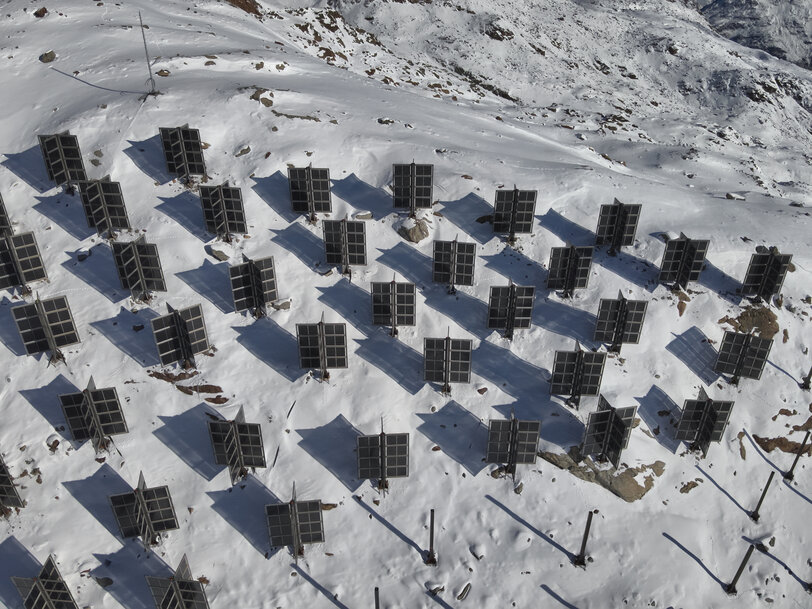
SolarEdge and HELIOPLANT are working together to deploy a photovoltaic system optimized for alpine regions, combining a cross-shaped bifacial module structure with DC-optimized inverter technology to address snow load, shading, and performance variability at high altitude.
Context of the Cooperation
HELIOPLANT specializes in photovoltaic system design for mountainous terrain, where snow accumulation, wind-driven drifts, and uneven irradiation limit the effectiveness of conventional linear PV arrays. SolarEdge provides inverter and module-level power electronics designed to mitigate mismatch losses and partial shading effects in complex PV layouts.
The cooperation addresses the technical challenge of maintaining stable energy output under alpine conditions, where variable snow reflection, low sun angles, and intermittent shading can significantly reduce system performance. Combining mechanical design optimized for snow management with electrical architectures that allow independent module operation was required to ensure predictable energy production at scale.
Technical Solution and Responsibilities
HELIOPLANT contributes a patented cross-shaped, column-mounted support structure carrying 15 or 16 bifacial PV modules arranged in four independent wings. The geometry promotes wind-induced turbulence that limits snow accumulation on module surfaces. Snow craters forming around the structure increase ground reflectance, enhancing rear-side irradiance through the albedo effect.
SolarEdge supplies DC-optimized inverters and Power Optimizers, enabling each module to operate independently rather than being constrained by string-level current matching. This architecture limits energy losses caused by partial shading, uneven rear-side gains, or temporary snow coverage, which are common in bifacial and non-planar PV installations.
Deployment and Implementation
The cooperation is being implemented at a high-altitude site in Sölden, Austria, at elevations between 2,850 m and 3,000 m. Following a pilot installation completed in 2023, a larger system with a nominal capacity of approximately 6.3 MWp is under construction.
The plant consists of around 800 HELIOPLANT structures equipped with bifacial modules, SolarEdge inverters, and Power Optimizers. The system is integrated into existing electrical infrastructure supplying multiple ski resort facilities, including lift systems, buildings, and snowmaking equipment.
Applications and Use Cases
The primary application is electricity generation for ski resorts and other alpine infrastructure with high winter energy demand. Technical use cases include winter-dominant load profiles, sites with persistent snow cover, and locations where conventional ground-mounted PV systems are impractical due to terrain or wind conditions.
Expected Impact
The system is designed to deliver stable winter generation by maintaining snow-free module surfaces and reducing electrical mismatch losses. Based on system capacity and load profiles, the installation is expected to supply approximately one-third of the annual electricity demand of three ski resorts, corresponding to around 28 GWh per year. The cooperation demonstrates a technically viable approach for extending photovoltaic deployment into high-altitude environments where conventional PV architectures are limited.
www.solaredge.com
