
www.technology4environment.com
22
'25
Written on Modified on
Automation for Large-Scale Electric District Heating
Valmet will deliver a distributed control system for Helen Ltd’s new air-to-water heat pump plant and electric boilers in Helsinki, supporting flexible, low-emission district heating.
www.valmet.com
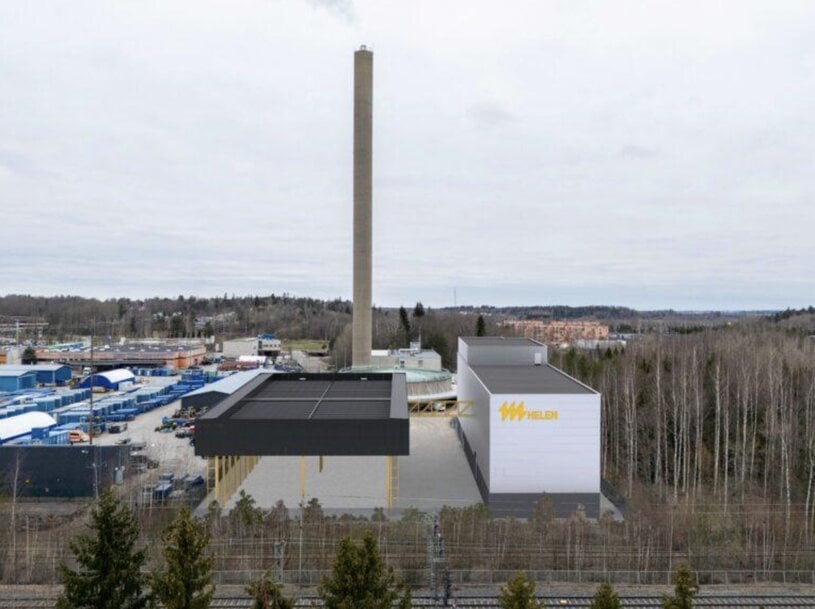
Valmet has been selected to supply an automation system for Helen Ltd’s Patola heating plant in Helsinki, which combines a large-scale air-to-water heat pump with electric boilers to support the city’s transition toward low-emission district heating.
Project context and scope
The Patola project, developed by Helen Ltd, includes an industrial-scale air-to-water heat pump plant with a heating capacity of approximately 30 MW, alongside two electric boilers rated at 50 MW each. Once completed, the air-to-water heat pump facility is expected to be the largest of its kind globally.
The installation is part of Helen’s long-term energy strategy to reduce reliance on fossil fuels while maintaining reliable and competitively priced district heating for the Finnish capital, Helsinki.
Role of the automation system
Valmet will supply its distributed control system to manage and optimize the operation of both the heat pump plant and the electric boilers. The automation system is designed to coordinate multiple heat production assets, enabling flexible operation in response to varying heat demand and electricity market conditions.
Precise control of the heat pumps and boilers supports stable operation and helps balance efficiency with responsiveness, which is critical in district heating systems increasingly dependent on electricity-based heat production.
Technical characteristics of the heating plant
The air-to-water heat pump uses outdoor air as its heat source and carbon dioxide (CO₂) as the refrigerant. This configuration allows efficient operation even at ambient temperatures as low as –20 °C, which is essential for reliable performance in Nordic winter conditions.
Together, the heat pump plant and electric boilers are expected to generate more than 500 GWh of heat annually. According to project estimates, this output will reduce carbon dioxide emissions by over 56,000 tonnes per year compared with conventional heat production methods.
Contribution to district heating flexibility
Electric boilers play a complementary role by providing rapid-response heat production when required, for example during peak demand or when electricity prices are favorable. Coordinating these assets through a single distributed control system allows Helen to optimize dispatch between heat pumps and boilers, improving overall system efficiency.
This type of flexible operation is increasingly important as district heating networks integrate variable renewable electricity and move away from fossil-based baseload generation.
Timeline and operational outlook
Construction of the Patola heating plant is ongoing, with heat production scheduled to begin during the 2026–2027 heating season. Once operational, the facility will form a central component of Helsinki’s low-emission district heating infrastructure.
Broader energy transition context
Large-scale electric heat production, supported by advanced automation, is emerging as a key pathway for decarbonizing district heating in urban environments. The Patola project illustrates how industrial-scale heat pumps and electric boilers, combined with centralized control systems, can deliver substantial emissions reductions while maintaining operational reliability.
Within this context, Valmet’s automation delivery supports Helen’s objective of aligning long-term district heating operations with climate targets, while ensuring that system performance and customer price stability are maintained as the energy mix evolves.
www.valmet.com
