

www.technology4environment.com
18
'26
Written on
Modified on
ABB News
Bidirectional converter stations optimize energy injection parameters in grid infrastructure
ABB introduces utility-scale power conditioning portfolios utilizing hybrid liquid and air cooling architectures to stabilize harmonic distortion variables.
global.abb
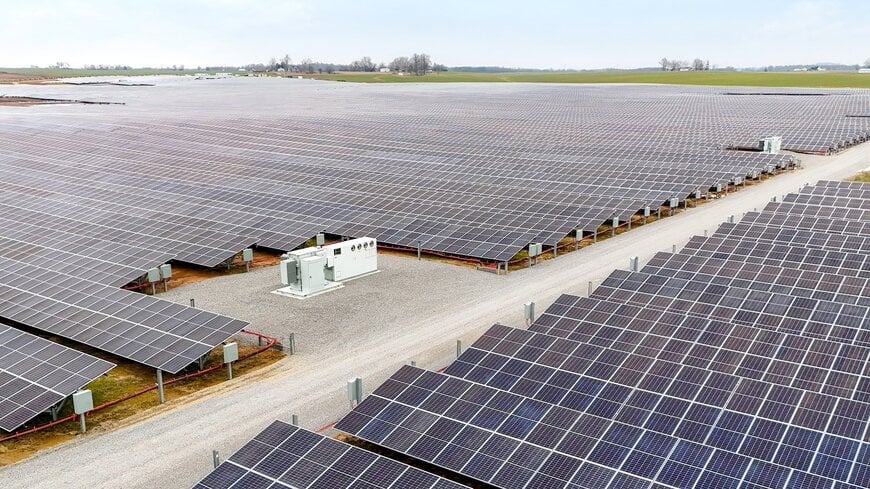
ABB has announced the introduction of its Proteus photovoltaic inverter and battery energy storage system portfolio designed to optimize power conversion efficiency and network synchronization across large-scale renewable networks. This unified hardware and control platform introduces specialized power conversion architectures developed to sustain continuous grid integration demands, delivering operational availability metrics over long-term deployments.
To demonstrate these high-efficiency conversion capabilities in a live industrial layout, the utility-scale infrastructure suite is being introduced ahead of its exhibition appearance at Intersolar from June 22 to 25, 2026, in Munich, Germany. The global energy transition requires these types of scalable solutions as utility-scale generation continues to rapidly expand to achieve strict net-zero targets.
Coupled conversion efficiency and harmonic distortion mitigation parameters
The structural engineering of high-capacity central inversion stations necessitates minimization of electrical impedance losses and internal switching distortion to preserve voltage profile integrity. Operating as a utility-scale generation layer, the central inverter hardware executes high-frequency commutation loops to achieve a peak operational conversion efficiency threshold of 99.45 percent. This tracking capability maximizes total active power transmission from solar arrays into regional distribution networks. The integrated output filters constrain total harmonic current distortion below a strict 0.7 percent ceiling.
By filtering high-frequency ripple waveforms before the alternating current crosses the primary transformer link, the setup limits localized electromagnetic stress and prevents parasitic heating inside adjacent sub-station assets. This structural stabilization delays terminal insulation degradation, extending the overall lifecycle metrics of connected infrastructure layers.
To preserve operational baseline reliability when environmental ambient conditions exceed standard thresholds, the physical architecture coordinates a hybrid thermal configuration combining air movement vectors and fluid-to-air cooling loops. The automated liquid cooling circuit isolates heat-sensitive silicon-controlled rectifiers and insulated-gate bipolar transistor junctions, pulling away high-temperature gradients generated during maximum power generation segments.
The low-profile internal layout optimizes internal airflow channels, preventing dead zones where high ambient moisture or particulate matter could form conductive pathways. This containment shell safeguards the internal logic processors from unconditioned outdoor factors, allowing reliable project deployments across aggressive dessert or high-salinity coastal areas.
Bidirectional conversion structures and black start grid stabilization functions
To combat grid volatility driven by fluctuating generation baselines, the energy architecture incorporates a bidirectional converter station layout engineered for large-scale battery storage deployments. This electromechanical integration implements a chemistry-agnostic interface block that unifies independent battery storage chemistries onto a standardized DC bus. The software framework utilizes advanced grid-forming control algorithms to establish autonomous voltage references without requiring an active external utility signal link. This functional independence allows the installation to operate as a virtual synchronous machine, supplying active damping and reactive current injection to stabilize local grid frequencies during network faults.
When handling total system restoration events following local network blackouts, the embedded control layer executes complete black-start operation procedures. The bidirectional conversion controllers command discrete internal auxiliary power nodes to energize foundational step-up transformers independently, rebuilding internal power networks systematically before syncing the primary battery reserves with the wider energy distribution lines.
The computational infrastructure balances dynamic charging profiles and automated thermal extraction intervals during active power shifts. This structural pacing shields internal capacitor blocks from transient overvoltage stress and curtails overall balance-of-plant operating expenditure across a planned 30-year operational lifecycle.
Additional Context: This section details technical specifications and competitive benchmarking not included in the original product announcement
Within the utility-scale renewable inversion and utility battery energy storage market, this expanded portfolio enters direct technical competition with established centralized hardware platforms such as the Sunny Central UP series from SMA Solar Technology or the high-capacity central conversion blocks built by Sungrow Power Supply. Objective engineering benchmarking reveals unique trade-offs regarding power-density envelopes and output filter topology mechanics. While several standard competitive central stations rely exclusively on forced-air ventilation arrays which increases physical filter replacement frequencies and expands the total concrete foundation footprint inside the installation yard the ABB platform integrates a close-coupled hybrid cooling block directly into a reduced cabinet enclosure. This layout minimizes transport mass parameters and drops total site assembly timelines.
Additionally, the development framework leverages a global cumulative installation profile exceeding 120 gigawatts of power conversion capacity to refine its automated fault-clearing logic. This extensive baseline knowledge underpins the field service network across seventy nations.
However, achieving maximum power yield metrics under dense, volatile grid configurations demands precise synchronization with modern plant-level supervisory control and data acquisition architectures. Sub-optimal communication loop calibration or elevated latencies across local fiber networks can induce localized phase synchronization delays at the inverter terminals. This variable lag temporarily lowers total reactive power injection responsiveness compared to simplified, single-string inverter arrays configured with localized hardwired controller links within an isolated container array.
The long-term asset management strategy relies on automated grid tracking matrices to balance phase displacement. By modulating internal choke fields dynamically during thermal shifts, field engineers protect the localized sub-station switchgear from voltage feedback loops during unexpected islanding dropouts.
Edited by Sucithra Mani, Induportals editor – adapted by AI.
www.abb.com
