

www.technology4environment.com
16
'26
Written on
Modified on
Fresh Lock News
Reclosable closures enable circular flexible packaging
Fresh-Lock presents closure technologies at Interpack 2026 to support recyclable flexible packaging and improve production efficiency across multiple consumer goods sectors.
fresh-lock.com
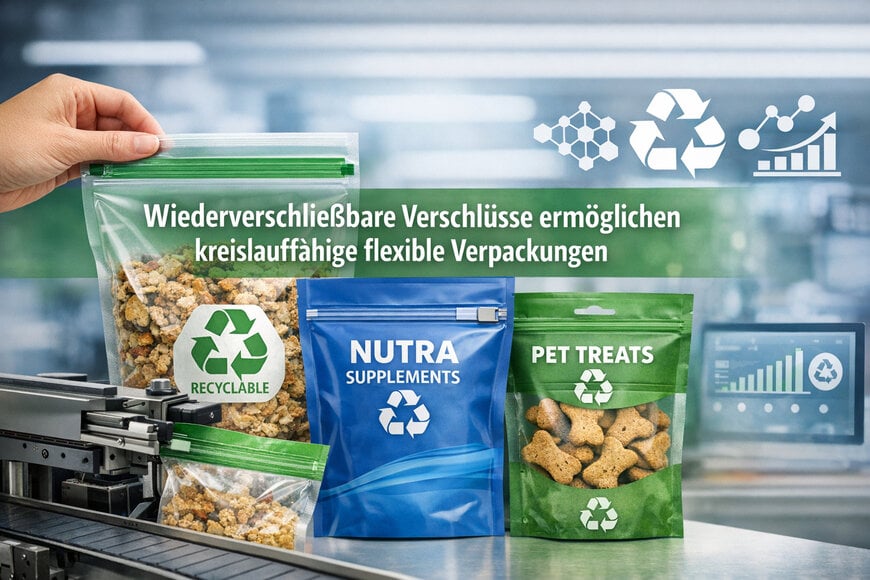
Reclosable closure systems for flexible packaging are being developed to improve recyclability, usability, and manufacturing efficiency across food, personal care, and pharmaceutical applications. At Interpack 2026, Fresh-Lock will present closure technologies designed to support circular packaging strategies and measurable sustainability targets.
Transition from rigid to flexible packaging systems
The showcased technologies address a broader industry shift from rigid to flexible packaging formats. This transition is driven by material reduction, lower transportation weight, and improved production efficiency.
Reclosable zipper and slider systems enable flexible pouches to maintain product integrity after opening, which is critical for categories such as food, nutraceuticals, and pet care. These systems also enhance consumer usability through repeated opening and sealing cycles without significant loss of performance.
Closure systems supporting circular design
The company’s 8000 series closures are engineered to support recyclability requirements while maintaining compatibility with existing packaging production lines. This reduces the need for major equipment modifications, which is a key constraint in packaging line upgrades.
By integrating closure systems into mono-material or recyclable pouch structures, manufacturers can align with evolving regulatory expectations and sustainability frameworks that prioritise measurable outcomes such as material reduction and recyclability rates.
This approach reflects the increasing importance of the digital supply chain, where material traceability and lifecycle data are used to validate sustainability claims.
Performance and production considerations
Closure technologies must balance sealing reliability with high-speed manufacturing requirements. Press-to-close zippers and slider systems are designed to integrate into automated packaging lines, supporting consistent sealing performance across different pouch formats.
The ability to maintain production efficiency while introducing recyclable components is critical, as downtime or reduced throughput can offset sustainability gains. The presented systems aim to minimise such trade-offs by ensuring compatibility with existing converting and filling processes.
Industry collaboration at Interpack 2026
The technologies will be presented at Interpack 2026, held from 7–13 May in Düsseldorf, Germany. The event serves as a platform for collaboration between packaging suppliers, converters, and brand owners addressing challenges such as recyclability, material reduction, and regulatory compliance.
The focus on measurable sustainability reflects a shift away from generic environmental claims toward quantifiable performance indicators, including recyclability, waste reduction, and material efficiency.
Role of closures in packaging performance
Closure systems function as a critical interface between packaging and user interaction. Their design influences not only convenience and product protection but also the overall recyclability of the packaging system.
As flexible packaging adoption increases, closure technologies are becoming a key factor in enabling circular design while maintaining functional performance across diverse application areas.
Edited by an industrial journalist Sucithra Mani with AI assistance.
www.fresh-lock.com
