
www.technology4environment.com
12
'26
Written on Modified on
Battery-Electric Material Handler for Waste Wood Shredder Feeding
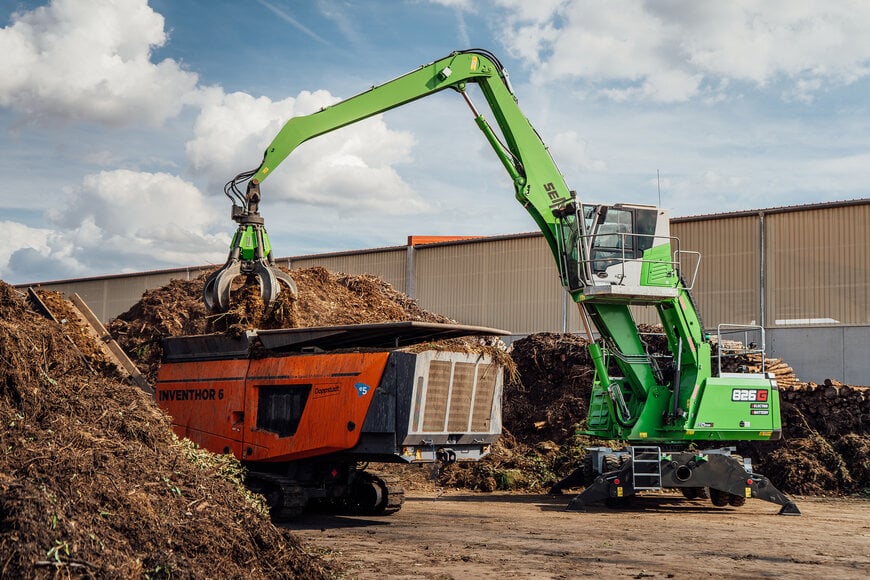
Hahn Kompost runs a SENNEBOGEN 826 G Electro Battery on self-generated solar power, using a battery pack for cable-free moves.
www.sennebogen.com
Application areas: waste wood processing, shredder feeding, composting.
Industry: recycling and waste management.
Hahn Kompost processes waste wood and green waste, operates a composting plant and produces wood chips. To feed its electric waste wood shredder, the company uses a SENNEBOGEN 826 G Electro Battery material handler with a reach of up to 13 m. The machine runs mainly on mains electricity from the company's own photovoltaic system, and a single battery pack lets it work for about one to two hours without a cable.
Electrifying waste wood processing
To cut fossil fuel use and make consistent use of renewable energy, Hahn Kompost is converting its operations to electric drive step by step. The waste wood processing line came first. It now runs an electric shredder, wheel loaders and the 826 G Electro Battery, all supplied with electricity generated on site. “We simply want to move away from fossil fuels and use the energy we produce ourselves,” says Managing Director Michael Hahn.
Sizing the battery for the application
SENNEBOGEN battery-powered machines can carry one to four battery packs, so capacity can be matched to the operation. At Hahn Kompost, the 826 G spends most of its working time connected to the grid, feeding a stationary shredder, so the company chose a single pack. The battery is not meant to power a full shift. Its job is to let the machine disconnect from the cable and move around the site, for example for maintenance. “The only reason the battery pack was important to us was so that we could move the machine around,” says Hahn. This avoids paying for unused capacity while removing the main restriction of a cable-only machine: a fixed working position.
Operator experience and machine control
Machine operator Franz Traidl, who knows diesel handlers from experience, points to lower noise, easier operation and less maintenance. “You have less maintenance because you no longer have air filters, no need to refuel, no AdBlue, and it's significantly quieter,” he says. Low noise matters especially for indoor work, and the cab's audio comfort system with active noise cancellation reduces it further. The machine responds immediately to joystick input, and the SENcon control system lets the operator adjust lift speeds and functions. After about two months in operation, Traidl's verdict is that the battery-powered machine is “just as powerful as a diesel machine.”
Operating costs and process integration
With no diesel or AdBlue, fewer service items and self-generated electricity, operating costs fall. “Our new machine actually pays for itself relatively quickly because we save on all the diesel,” says Hahn. SENcon also coordinates the material handler with the shredder, so waste wood is fed in a steady, controlled flow.
Next electrification steps
Hahn Kompost plans to electrify its composting plant and vehicle fleet next, to reduce emissions further and use more of its own electricity. The choice of SENNEBOGEN also reflects a long-standing partnership, a nearby sales office, spare parts supply and fast service.
Edited by Natania Lyngdoh, Induportals editor, with AI assistance.
www.sennebogen.com
